
Views: 0 Author: Site Editor Publish Time: 2026-07-01 Origin: Site


Manufacturing facilities often reach a critical tipping point in their operational growth. Traditional cutting bottlenecks slowly begin to severely impact your overall facility profitability. Managers constantly battle rising material waste, severe skilled labor shortages, and highly inconsistent part tolerances. These daily friction points rapidly eat into your hard-earned operational margins. You must decide exactly when to stick with reliable manual sawing. More importantly, you need to know when upgrading to a CNC Automatic Saw is fully justified financially.
This article provides a clear, unbiased evaluation of both production methods. We will thoroughly explore the complete automation spectrum to guide your next investment. You will uncover hidden Total Cost of Ownership (TCO) drivers and practical implementation realities. Finally, we cover strategic labor reallocation techniques. These strategies will help you scale operations effectively and consistently outpace industry competitors.
Efficiency vs. Setup: Manual saws excel at immediate, one-off cuts with zero programming, while CNC saws dominate high-volume, highly repeatable production runs.
Hidden TCO: The high upfront cost of a CNC system is typically offset by reduced material scrap, lower liability (fewer workplace injuries), and higher operational uptime.
Labor Strategy: Transitioning to CNC isn't just about replacing operators; it’s about reassigning skilled labor to higher-value tasks like complex assembly or welding.
The Middle Ground: Upgrading isn't strictly binary—facilities can scale from manual to semi-auto, and eventually to full CNC systems as volume demands.
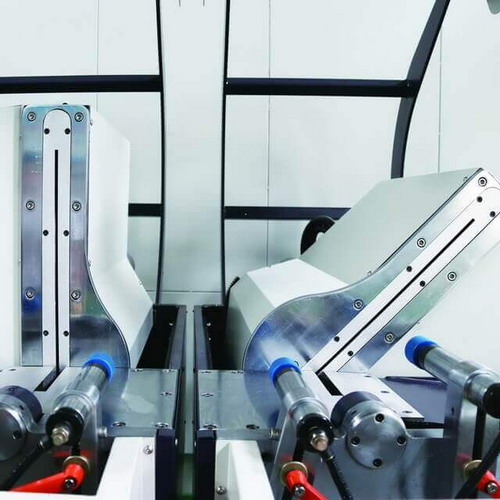
We often view industrial automation as a strict, rigid choice. You either cut everything by hand, or you fully automate the floor. The reality offers much more nuance. Manufacturing provides a broad spectrum of scalable sawing solutions. You must match your equipment directly to your daily production volume.
Manual cutting relies entirely on an operator's physical force. Humans use their direct intuition to clamp, feed, and cut raw materials. We highly recommend these reliable tools for basic maintenance shops. They also excel at creating custom prototypes rapidly. They require very little training for simple cuts. However, operator fatigue limits their daily output severely.
These machines serve as an excellent operational bridge solution. They use powerful hydraulics or pneumatics for material clamping. They also fully automate the downward cutting stroke. However, you still require manual material indexing between individual cuts. They perfectly suit mid-level production floors. They reduce human fatigue significantly without demanding complex programming.
These advanced systems operate as fully programmable manufacturing units. They utilize digital CAD/CAM data directly. They autonomously control feed rates, blade angles, and precise cutting speeds. They prove absolutely essential for achieving strict ISO-level tolerances. You need them for "lights-out" unstaffed manufacturing shifts. For example, deploying a 3-Axis CNC Automatic Saw introduces incredible spatial flexibility. It handles highly complex geometries effortlessly. Manual operators simply cannot reliably replicate this performance across long, demanding shifts.
Always map your exact daily cut volume before selecting a machine tier.
Track your current scrap rates manually for one full month.
Consult your floor operators regarding their daily physical fatigue levels.
Let us evaluate these two cutting approaches thoroughly. We will compare them across five critical production dimensions. This framework helps you make a highly objective purchasing decision.
Manual sawing remains highly dependent on daily operator fatigue. It relies heavily on individual human skill and vision. This manual process naturally stays prone to frequent micro-errors. Alternatively, digital technology achieves perfect micrometer accuracy consistently. It utilizes highly advanced servo motors. It relies on automatic digital feedback loops to self-correct during active cuts.
You can deploy a traditional saw almost instantly. It works perfectly for single, rapid repair cuts. Conversely, a digital machine requires CAD/CAM software programming. It demands dedicated initial machine setup time. However, it yields entirely unmatched throughput once a major batch run actually begins. The machine cuts continuously without breaks.
Manual floor operations remain limited mostly to basic straight cuts. Operators handle simple miter angles well enough. Automated systems expand your floor capabilities exponentially. A Multi Angle CNC Automatic Saw executes difficult compound cuts flawlessly. It also performs complex material nesting optimizations automatically. It completes these difficult tasks in one single continuous operation.
Manual cutting demands deep physical hand-eye coordination. It requires exceptional raw material intuition. Workers often need years of dedicated shop apprenticeship to master it. Digital operation demands a completely different technical skill set. Operators need strong software proficiency today. They must understand basic G-code structures thoroughly. They also need proactive system troubleshooting skills.
Use this quick-reference chart to guide your specific evaluation process.
| Production Feature | Manual Sawing Outcome | CNC Sawing Outcome | Ideal Use Case |
|---|---|---|---|
| Initial Setup Time | Instant; virtually zero preparation required. | Requires CAD/CAM programming and tooling setup. | Manual wins for quick one-off repairs. |
| Cutting Speed | Slow; highly limited by operator stamina. | Exceptionally fast; continuous 24/7 operation. | CNC wins for high-volume batch runs. |
| Precision Control | Variable; prone to human measurement errors. | Micrometer accuracy; driven by servo motors. | CNC wins for aerospace or medical tolerances. |
| Material Waste | High; lacks intelligent material nesting. | Minimal; software optimizes every single cut. | CNC wins for expensive raw materials. |
| Initial Cost | Low capital expenditure. | High capital expenditure. | Manual wins for strict, tight budgets. |
Buyers often focus solely on the initial machine sticker price. This highly limited view ignores massive hidden operational costs. Let us carefully uncover the true Total Cost of Ownership (TCO). We must look beyond the initial purchase order.
Advanced digital software utilizes highly smart nesting algorithms. It expertly turns random off-cuts and scrap into perfectly usable parts. Many facilities process highly expensive metal alloys daily. They also handle premium composite materials routinely. This single nesting feature drastically shortens your primary ROI period. You simply stop throwing away valuable raw stock into the scrap bin.
Manual feeding inherently keeps human operators dangerously close to spinning blades. Automation physically separates your valuable labor from the active cutting zone. This distinct physical separation instantly lowers workers' compensation premiums. It also drastically reduces severe workplace injury risks. Enhanced safety translates directly to measurable financial savings.
Many managers view automation as simple job elimination. We strongly suggest shifting this flawed perspective. Calculate the true financial gain of reassigning a veteran operator. Move them entirely away from highly repetitive manual cutting tasks. Place them into high-margin complex fabrication roles. They can also supervise critical quality control stages instead.
Industrial-grade manufacturing systems offer incredible physical durability. A properly maintained Heavy Duty CNC Automatic Saw operates reliably for decades. It often boasts an operational lifespan exceeding 20 long years. This extreme longevity highly dilutes your annualized capital expenditure. Your actual long-term monthly machine cost drops significantly over time.
Ignoring the strict cost of human error and miscut raw materials.
Failing to calculate lowered insurance premiums into the new ROI.
Overlooking the revenue generated by running unmanned overnight shifts.
We must acknowledge where traditional cutting methods still dominate completely. You do not always need full digital automation. Certain business models thrive strictly on manual equipment.
Traditional equipment requires a fractional initial capital expenditure. It costs far less than advanced digital machining centers. You also entirely avoid expensive specialized infrastructure upgrades. Manual machines rarely require advanced liquid cooling systems. They operate perfectly well without strict facility climate control protocols.
Many busy job shops handle primarily diverse repair work. They also process custom one-offs or R&D prototypes frequently. Programming a digital system takes precious engineering time. This digital setup time entirely negates any actual cutting speed advantages. Manual machines win these quick-turnaround daily races easily.
Older equipment runs purely on raw mechanics and electricity. It remains completely immune to unexpected facility network outages. It ignores annoying software update bugs entirely. You never worry about frustrating CAD/CAM compatibility issues. Production never stops merely due to a dropped Wi-Fi signal or server crash.
Upgrading your shop floor introduces entirely new operational friction. You must anticipate these practical rollout risks carefully. Preparation guarantees a highly successful machine integration.
Heavy industrial machinery demands serious physical space preparation. Integrating a Large CNC Automatic Saw requires significant floor space clearing. You must install dedicated power phasing safely. You potentially need upgraded material handling systems nearby. We highly suggest installing automated roller conveyors. They actively prevent dangerous material bottlenecks upstream.
Your current human operators face a steep learning transition. They must pivot entirely from physical craftsmanship to digital supervision. Overall production will temporarily slow down at first. Expect an initial 30 to 60 day training integration phase. We highly recommend scheduling lighter production runs during this specific transition period.
Mechanics fix broken older manual saws quickly. They use standard wrenches and cheap off-the-shelf parts. A sudden digital machine breakdown presents different challenges entirely. It may require specialized OEM technicians immediately. You might need expensive proprietary replacement circuit boards. Preventative maintenance service contracts become absolutely non-negotiable for long-term success.
| Rollout Challenge | Recommended Mitigation Strategy |
|---|---|
| Floor Space Limitations | Conduct a 3D CAD layout audit before purchasing equipment. |
| Operator Resistance | Involve veteran operators in the machine selection process early. |
| Software Integration | Ensure new CAM software communicates with your existing ERP system. |
How do you choose the right path forward? Use this highly strategic framework to decide confidently. Base your choice strictly on hard floor data.
Look closely at your actual daily product output. Does your facility run 80% repeat parts and 20% custom parts? A digital automated machine becomes entirely justifiable. Does your production ratio lean the exact opposite way? You should stick securely to manual or semi-auto options.
Gather your raw shop floor data meticulously. Calculate the exact monthly financial cost of human-error miscuts. Does this specific dollar amount exceed your monthly machine financing cost? If so, the automation upgrade literally pays for itself immediately.
Examine your local industrial hiring market honestly. Many shops simply cannot hire skilled manual sawyers anymore. They constantly struggle retaining talent due to an aging industrial workforce. If this sounds highly familiar, automation becomes a strict operational necessity. It ensures your long-term business survival, regardless of high upfront capital costs.
Manual saws undoubtedly remain absolutely indispensable for high-mix, low-volume custom metalwork. They provide unmatched agility for quick daily repairs. However, growing manufacturers eventually hit a severe operational ceiling. If you want to scale output, standardize product quality, and protect tight profit margins from material waste, upgrading is required. Transitioning to a fully automated system stands as a requisite strategic move for modern survival.
Before contacting any equipment vendors, take immediate action internally. Conduct a strict two-week internal shop audit. Track all daily material scrap closely. Measure precise operator hours spent strictly on repetitive cutting tasks. Monitor your current machine downtime accurately. Use this vital raw data to build an undeniable, data-backed business case for your next investment.
A: No. It shifts the role entirely. You move away from exhaustive physical labor. The operator transitions to vital technical supervision. They handle advanced machine programming daily. They also conduct strict quality assurance checks. Your workers become highly skilled technicians instead of manual laborers.
A: Yes, it is higher. Routine physical maintenance remains relatively predictable. However, digital systems require frequent software updates. They demand precise sensor calibrations routinely. They also require specialized OEM servicing annually. You must carefully factor these specific requirements into your overall TCO calculations.
A: It depends heavily on your daily shift structures. Running operations 24/7 yields faster returns than single daily shifts. Your overall material waste savings also impact this timeline. Generally, ROI typically ranges from 12 to 36 months. Mid-to-high volume manufacturing facilities usually see returns on the shorter end.


