


LATEST NEWS


2026 National Day Holiday NoticeDear Valued Partners and Clients, Please be kindly informed that our company will observe the 2026 Chinese National Day public holiday according to the official arrangement, the holiday schedule is as follows:Holiday Period: October 1st, 2026 to October 7th, 2026Resum
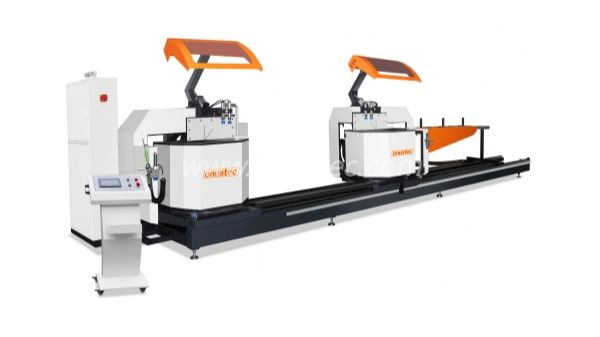
Processing complex architectural profiles with traditional 3-axis or single-head saws creates significant production bottlenecks. Fabricators often face high scrap rates and increased labor costs because basic cutting methods require manual secondary adjustments to achieve precise compound angles. T
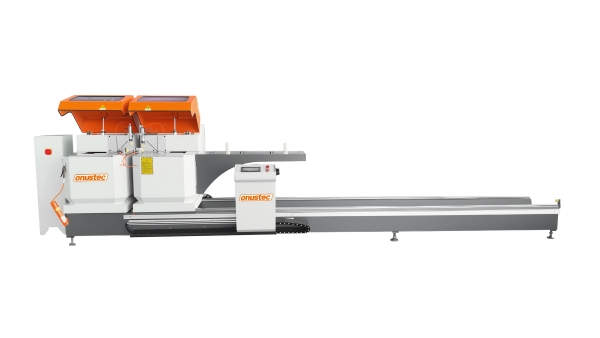
For manufacturers facing the pressure of high-volume production, the cutting station often becomes the primary bottleneck. Standard single-head saws simply cannot keep pace with the demands of modern window wall fabrication or industrial profile manufacturing. The need to measure, cut, rotate, measu

Scaling production capacity often hits a hard ceiling when relying on single-head or manual cutting stations. The reliance on manual measurement results in inconsistent angles, bottlenecked throughput, and unacceptable levels of material waste. For manufacturers of windows, doors, and industrial alu

Another 5-Axis Multi-Angle CNC Notching Saw Delivered to the USA Another set of our 5-Axis Multi-Angle CNC Notching Saw has been successfully delivered to a valued customer in the USA for a complex and demanding facade project. Designed for high-performance facade fabrication, this advanced CNC syst

Investing in a high-capacity cutting line is one of the most significant capital decisions a window fabricator or industrial profile manufacturer will make. A mismatched equipment choice often leads to immediate production bottlenecks, excessive material waste, and costly secondary finishing require

Cutting to length (CTL) is often the primary bottleneck in door, window, and frame manufacturing. Even the fastest assembly line halts if the saw operator struggles to measure twice and cut once. This bottleneck forces a critical choice between two distinct technologies. On one side stands the manua
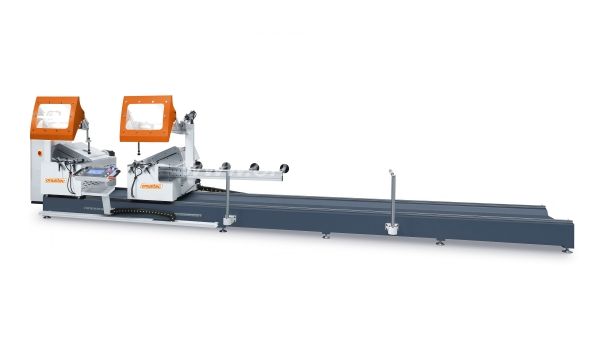
The transition from manual cutting stations to automated systems represents a fundamental shift in industrial fabrication. While legacy manual saws rely heavily on operator skill and physical measurements, modern CNC systems demand a focus on process engineering and data management. A 3-Axis CNC Dou

Investing in a high-performance CNC Automatic Saw represents a major capital expenditure for any fabrication shop. Its true value lies far beyond rapid cutting speeds. It hinges entirely on reliable uptime across a potential 100,000-hour operational lifespan. We must frame machine maintenance as a s

Transitioning from manual cutting to in-house automation is a massive leap for any shop. A CNC Automatic Saw promises rapid scaling and unmatched precision. However, it also represents a formidable capital expenditure. You cannot treat this financial decision lightly. Skilled labor shortages and soa


