
Views: 0 Author: Site Editor Publish Time: 2025-10-30 Origin: Site


When milling demands long tools or continuous cuts, horizontal milling center solutions from Onustec Group offer unparalleled precision and efficiency. As the leading high-end aluminum and façade machine manufacturing specialist in China, Onustec Group combines decades of German technical expertise with innovative production capabilities, ensuring machines that handle complex milling tasks with reliability. From high-volume operations to intricate aluminum profiles, these horizontal milling centers are engineered to optimize workflow, reduce cycle times, and deliver superior surface finishes for a wide range of materials. Additionally, the integration of advanced automation and intelligent control systems ensures that operators can maintain consistent output quality while maximizing machine utilization. For industries requiring precise, repetitive milling operations, Onustec Group’s horizontal milling centers provide both the technical sophistication and practical reliability needed to maintain competitiveness in today’s demanding manufacturing environment.
A horizontal milling center stands out from other machining solutions primarily due to spindle orientation and structural design. Unlike vertical machines, the spindle in a horizontal setup is aligned parallel to the workpiece, allowing the use of long cutting tools without compromising rigidity. This orientation is particularly advantageous when performing deep cuts, extended grooves, or slots that demand consistent precision.
The horizontal spindle layout minimizes tool deflection, even when machining long or slender parts. Long overhangs, which in vertical mills could lead to vibrations and inaccuracies, are better supported in a horizontal configuration. This design enhances tool life and ensures dimensional consistency across the entire part length. Additionally, many modern horizontal milling centers incorporate rigid spindle heads and reinforced column structures, further reducing vibration and improving overall stability during heavy-duty cutting operations.
Horizontal milling centers employ advanced cutting strategies that maximize material removal rates while maintaining surface integrity. Multi-axis motion, combined with controlled feed rates and spindle speeds, allows operators to execute long cuts efficiently, reducing the number of setups required. This strategy is particularly important in high-volume production environments where every second counts. Moreover, the flexibility to perform simultaneous milling operations on multiple faces of a workpiece reduces overall cycle time, increases throughput, and allows manufacturers to handle more complex geometries without compromising accuracy.
Certain materials and part geometries benefit significantly from horizontal milling center configurations. These machines are not limited to generic milling—they excel in applications requiring precise material handling and extended tool engagement.
Complex castings often have irregular surfaces and intricate geometries that challenge traditional vertical mills. Horizontal milling centers provide stable machining platforms, allowing accurate finishing and precise removal of excess material from cast surfaces without compromising tolerances. By utilizing optimized tool paths and adaptive feed rates, operators can ensure that every section of the casting receives uniform material removal, minimizing the need for secondary finishing operations.
Prismatic parts, such as structural aluminum beams, industrial shafts, or automotive chassis components, require extended milling operations with consistent accuracy along the entire length. The horizontal spindle configuration facilitates long continuous cuts, reducing the need for frequent repositioning or re-clamping, which saves time and minimizes cumulative errors. This capability is particularly beneficial for aerospace and transportation industries, where precise dimensional control over long components is critical to assembly and performance.
Extruded aluminum profiles are prevalent in architectural and façade applications. Horizontal milling centers handle long, lightweight sections efficiently, producing grooves, slots, and complex profiles while maintaining a high-quality surface finish. The combination of spindle rigidity and optimized cutting strategy ensures that delicate extrusions remain distortion-free during processing. Advanced software integration allows operators to preprogram multiple profiles into a single production run, minimizing downtime between different extrusion designs and increasing overall efficiency.
Beyond aluminum, horizontal milling centers excel in machining other non-ferrous metals like copper and brass, as well as composite materials used in modern construction and aerospace. The ability to maintain high-speed, high-torque cutting conditions ensures that even tougher materials can be milled with precision, while minimizing tool wear and ensuring consistent quality across large production batches.
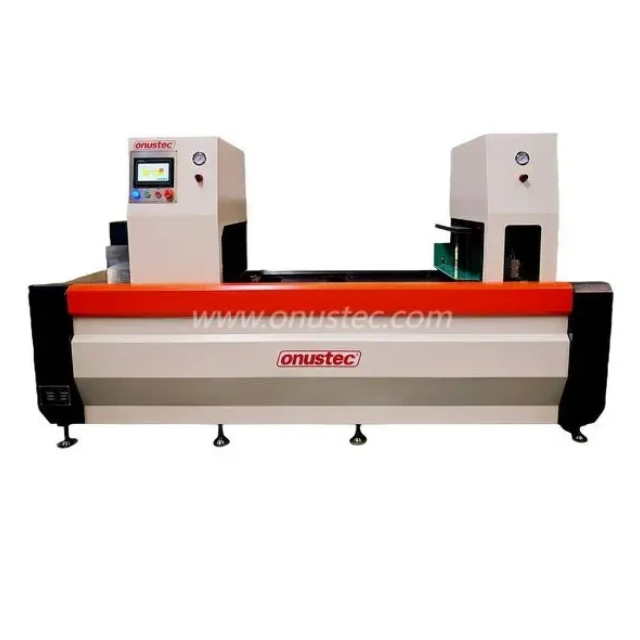
Horizontal milling centers are not only designed for accuracy—they also significantly improve workflow efficiency and surface quality. These benefits are critical for manufacturers seeking both productivity and product quality.
Effective chip management is a hallmark of horizontal milling centers. Gravity-assisted chip removal ensures that metal fragments are efficiently cleared from the cutting area, preventing recutting and tool damage. This results in smoother surfaces and reduced post-processing requirements. Advanced high-pressure coolant and air-blast systems further enhance chip evacuation, particularly when milling deep cavities or intricate profiles.
High-performance horizontal milling centers incorporate advanced coolant systems that maintain optimal tool temperatures. Consistent cooling reduces thermal expansion of both the workpiece and cutting tools, enhancing dimensional stability and extending tool life, especially during prolonged operations. For high-speed milling, these systems ensure that cutting edges remain sharp, maintaining consistent surface finishes and reducing the need for frequent tool replacements.
The horizontal setup reduces the number of times a part must be repositioned for additional operations. This not only saves valuable time but also minimizes alignment errors, ensuring each component meets tight tolerances. For high-volume production, reduced re-clamping translates directly to faster cycle times and lower operational costs. Additionally, horizontal milling centers often include built-in workpiece fixturing options that accommodate multiple components simultaneously, allowing batch processing and further reducing total production time.
Due to improved rigidity, chip evacuation, and stable cutting conditions, horizontal milling centers consistently produce superior surface finishes. Whether machining aluminum extrusions, castings, or long prismatic parts, manufacturers can achieve precise dimensional tolerances and smooth surfaces, reducing the need for subsequent finishing operations like sanding or polishing.
Selecting the correct spindle and tooling combination is vital to achieving optimal results in horizontal milling applications. Understanding the balance between speed, torque, and toolholder configuration can make a significant difference in both efficiency and part quality.
High RPM spindles allow rapid material removal on softer metals like aluminum, while high-torque spindles are essential for cutting dense materials or deep grooves. Onustec Group offers machines with versatile spindle options, allowing operators to adjust performance according to specific material requirements and milling strategies. By analyzing part geometry, material properties, and desired surface finish, operators can select the optimal spindle and cutting parameters for each task, maximizing both productivity and quality.
Proper toolholding is essential for maintaining precision and reducing vibration. Horizontal milling centers support a wide range of toolholders, from shrink-fit and collet systems to heavy-duty modular designs. These options allow manufacturers to optimize setups for various tool lengths and diameters while maintaining the stability required for complex cuts. Additionally, modern tool monitoring systems alert operators to wear or deviation, enabling proactive maintenance and reducing downtime.
In high-volume production scenarios, horizontal milling centers excel by integrating with automated material handling systems and palletized workstations. This setup maximizes machine utilization and allows continuous operations with minimal operator intervention.
By implementing palletization strategies, manufacturers can pre-load multiple workpieces and change them automatically during milling cycles. Tooling banks ensure that a wide variety of cutters are immediately available, reducing downtime for tool changes and setup adjustments. Onustec Group’s machines are designed to support these advanced workflows, enabling manufacturers to achieve higher throughput without compromising quality. In addition, software-controlled scheduling and predictive maintenance features allow production planners to optimize machine uptime, ensuring that high-volume milling operations remain efficient and predictable.
Horizontal milling centers can integrate seamlessly with robotic material handling systems, enabling fully automated production lines. This level of automation reduces operator fatigue, minimizes human error, and allows continuous production for extended shifts. For industries such as aerospace, automotive, and façade manufacturing, this capability ensures that even highly complex components can be produced at scale without sacrificing quality.
For manufacturers seeking efficient, high-precision machining, horizontal milling center solutions from Onustec Group deliver unmatched performance. By combining German-engineered design, advanced spindle configurations, and optimized workflow strategies, these machines excel in long cuts, complex profiles, and high-volume applications. Whether machining castings, aluminum extrusions, or long prismatic parts, Onustec Group’s horizontal milling solutions ensure superior surface finish, reduced cycle times, and consistent dimensional accuracy. To explore our complete range of high-end milling machines and discuss tailored solutions for your production needs, please contact us and discover how our specialized horizontal milling offerings can elevate your manufacturing efficiency.
What materials are best suited for horizontal milling centers?
Horizontal milling centers handle a variety of materials, including aluminum extrusions, castings, long prismatic parts, copper, brass, and composite materials, providing high precision and consistent surface finish.
How does a horizontal spindle improve long-cut accuracy?
The spindle orientation reduces tool deflection and allows longer overhangs, ensuring consistent dimensions across extended cuts and minimizing re-clamping errors.
Can horizontal milling centers support automated production?
Yes, these machines integrate with palletization systems, automated tooling banks, and robotic material handling for continuous, high-volume operations.
What are key considerations for tooling in horizontal milling?
Selecting the correct spindle speed, torque, toolholder type, and monitoring system ensures precision, reduces tool wear, and optimizes cycle times for different materials.

