
Views: 0 Author: Site Editor Publish Time: 2026-07-08 Origin: Site


Scaling a manufacturing workshop introduces exciting growth opportunities. However, this growth often hits a solid brick wall. Production bottlenecks emerge rapidly on the floor. They drag down daily output and heavily diminish your profits. Relying on manual cutting processes causes excessive labor costs. Material waste spirals completely out of control. Delayed order fulfillment ultimately angers your best clients. You might assume buying a sharper blade or hiring more staff solves the issue. In reality, investing in a CNC Automatic Saw represents a broader strategic shift. It releases crucial machining capacity across your entire shop floor. Upgrading from manual or semi-auto NC systems demands careful, upfront planning. You must evaluate your exact material mix and daily throughput needs. We will explore how to assess operator readiness accurately. You will also learn to define your long-term automation goals to guarantee a highly profitable equipment rollout.
Capacity Release Strategy: Offloading repetitive cutting to a dedicated CNC automatic saw frees up high-end routing and milling centers for complex, high-margin tasks.
Match Machine to Material: Selecting between standard, heavy-duty, or multi-angle models depends strictly on material thickness, required tolerances, and daily throughput.
Implementation Realities: Floor space, dust extraction, and operator software training are non-negotiable prerequisites for a successful rollout.
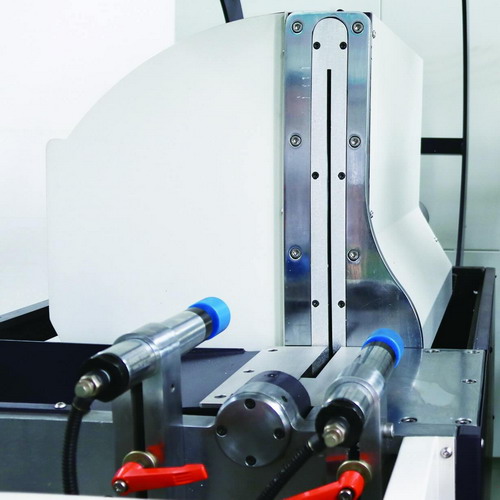
Many workshops misdiagnose their actual production problems. They blame slow operators or dull tooling. Usually, the bottleneck lies directly in poor machine allocation. Understanding your workflow goals helps you select the correct equipment. We must evaluate where your shop loses the most time.
Analyze how your current high-end CNC routers spend their day. Are they wasting valuable spindle time on simple linear cuts? Using a five-axis machining center to size standard panels drains your profitability. Shifting these basic tasks to a dedicated saw multiplies your overall factory throughput. Your expensive routers can then focus entirely on complex, high-margin profiling and drilling. This strategy essentially gives you the output of two new machines for the price of one.
Define where your workshop currently sits on the technology scale. You must understand your baseline before upgrading. The automation spectrum generally breaks down into three tiers:
Semi-Auto Saws: These machines utilize basic hydraulic clamps and feeds. Operators still handle most material positioning manually.
NC (Numerical Control) Saws: These offer keypad entry for basic feed rates and lengths. They lack advanced networking and optimization software.
Full CNC Saws: These provide absolute process accountability. They enable zero-intervention batch processing. Software controls every parameter automatically.
Determine if your operation requires strict digital tracking. High-volume shops usually need the zero-intervention capability of full CNC systems.
Establish your primary manufacturing model. Are you processing highly variable, custom jobs every day? This is a high-mix environment. High-mix shops require fast changeovers and highly flexible software. Conversely, you might focus on maximizing the sheer output volume of standardized blanks. This represents a high-volume model. High-volume facilities prioritize aggressive feed rates and heavy-duty material handling over flexible angle adjustments.
Best Practice: Always audit your most frequently processed materials over a 30-day period. Use this data to determine whether you need high-mix flexibility or high-volume speed.
Selecting the wrong machine class destroys your return on investment. You must match the equipment perfectly to your daily material demands. Let us explore the primary categories available on the market today.
Some operations process incredibly dense materials all day. A Heavy Duty CNC Automatic Saw solves the unique challenges of industrial cutting.
Best for: Thick, high-density materials, industrial metal stock, or heavy timber.
Key trait: High-torque motors and extremely rigid frames. Manufacturers design these specifically to prevent blade deflection under maximum load.
When you cut solid aluminum billets or thick hardwoods, vibration ruins your tolerances. Heavy-duty models absorb these vibrations. They guarantee a perfectly square cut even during aggressive feed cycles.
Furniture manufacturers and composite panel fabricators face different hurdles. They handle massive sheets. A Large CNC Automatic Saw addresses these exact footprint and capacity needs.
Best for: Oversized panel processing and high-capacity batch cutting.
Key trait: Expanded cutting envelopes and robust material handling systems. These often include automated rear-loading lift tables.
Operators cannot manually lift full units of MDF safely. Large models automate the lifting, feeding, and aligning phases. This drastically reduces physical fatigue and workplace injuries.
Custom joinery and architectural millwork demand immense flexibility. Straight linear cuts represent only a fraction of the daily work. A Multi Angle CNC Automatic Saw (Pivot/Rotary Types) handles these complex geometries perfectly.
Best for: Custom manufacturing, intricate miter cuts, and complex joinery preparation.
Key trait: Features an articulating head or a pivot mechanism. This executes precise angled cuts without any manual repositioning.
Manual angle setups introduce massive human error. A multi-angle machine recalculates the geometry digitally. It delivers perfect miters every single time.
| Saw Type | Ideal Material Profile | Primary Business Goal | Defining Feature |
|---|---|---|---|
| Heavy Duty | Thick metals, dense timber | Maximum power, prevent deflection | High-torque spindle, rigid cast frame |
| Large Format | Full sheet goods, large panels | High-volume batch processing | Automated rear-loading systems |
| Multi Angle | Custom extrusions, varied joinery | Complex geometric flexibility | Articulating pivot head |
Never buy industrial equipment based purely on brand names or cosmetic appeal. You must evaluate the underlying technical specifications. These specs dictate how well the machine performs under your specific roof.
Accuracy determines your scrap rate. Look for a 3-Axis CNC Automatic Saw to handle complex parameters simultaneously. A true 3-axis system controls automated material feeding, precise blade height adjustment, and exact positioning all at once. Controlling blade projection based on material thickness reduces friction. It minimizes off-cuts and eliminates costly waste.
Horsepower matters deeply in industrial settings. Match the motor horsepower to the maximum material density you process. Evaluate the maximum stack height your shop pushes daily. An underpowered motor bogs down during stack cutting. This burns the material and dulls expensive blades prematurely. Always verify your facility meets the required electrical phase requirements before taking delivery.
Your new equipment must talk to your existing office software. Verify compatibility with your current CAD/CAM software. Check if it integrates smoothly with your overall ERP system. Seamless file-to-machine data transfer eliminates manual data entry. Office staff send cut-lists directly to the operator's console. This severs the link between human typing errors and wasted materials.
Industrial saws present serious physical hazards. Evaluate the built-in protective enclosures. Look for machines featuring laser guidelines to keep hands away from the cutting zone. Verify automated dust extraction compatibility to protect operator lungs and prevent fire risks. Emergency braking systems must stop the blade in milliseconds. Meeting standard OSHA or ISO safety guidelines protects your staff and lowers your insurance liabilities.
Common Mistake: Ignoring dust collection requirements. High-speed CNC saws generate massive amounts of particulate. Failing to connect adequate CFM (Cubic Feet per Minute) extraction leads to sensor failure and severe respiratory hazards.
Buying the machine represents only step one. Installing it and making it productive introduces entirely new challenges. We must assess physical space and human factors carefully.
Floor space acts as prime real estate in any workshop. Large format and horizontal panel saws require significant floor space. They need room for both the machine chassis and the staging of raw and finished materials. You must calculate clearance for forklift loading. Vertical alternatives save massive amounts of space. However, they may sacrifice high-volume automated throughput. You must balance your available square footage against your daily production targets.
Automation changes the job description on your floor. Transitioning to CNC requires operators capable of managing software interfaces. They must handle digital troubleshooting confidently. The role shifts away from pure physical handling and heavy lifting. You need staff who understand digital file structures and basic machine logic. Assess your current team honestly. Identify individuals eager to learn new software.
Never underestimate the learning curve. Factor comprehensive vendor training into your initial timeline. A machine's reliability in a high-turnover environment depends heavily on two things. First, the software needs an intuitive interface. Second, you must conduct rigorous initial staff onboarding. Poorly trained operators crash expensive machines. Negotiate at least three to five days of on-site vendor training into your purchase contract.
We must change how we view capital expenditure. Looking only at the sticker price guarantees a poor decision. You have to calculate the total financial impact the machine brings over a five-year lifecycle.
Evaluate the investment based strictly on the speed of capital recovery. Stop focusing on the initial loan or the base purchase amount. A cheaper machine taking twice as long to set up costs you more over a year. High-end automated systems pay for themselves rapidly through operational savings.
Labor represents your highest variable cost. Calculate the exact hours saved by eliminating manual measuring. Factor in the time saved by removing manual material feeding. Think about the secondary trimming caused by human error. When an operator cuts a panel 1mm too short manually, someone else spends 20 minutes fixing it. Automation eradicates these wasted hours entirely.
Raw materials cost more today than ever before. Account for the cost savings generated by optimization software. Features like dynamic nesting and smart cut-lists minimize scrap drastically. They maximize usable parts per sheet or bar. Saving just five percent on your monthly material bill often covers the monthly equipment finance payment alone.
Every machine requires ongoing financial care. Factor the routine cost of blade sharpening into the Total Cost of Ownership (TCO). Include servo motor servicing and routine alignment checks. Budgeting for preventative maintenance keeps the machine running at peak profitability.
Standardizing your cutting operations through advanced automation provides a massive strategic advantage. It eliminates chaotic manual errors and stabilizes your daily output. By removing straight-line cutting from your expensive routers, you unlock hidden manufacturing capacity without expanding your building. This shift transforms your floor from a reactive environment into a predictable, highly profitable operation.
We highly recommend standardizing your shortlisting framework immediately. Document your current bottleneck hours accurately. Define the exact material capacities and thicknesses you need to process daily. Map out your available floor space, ensuring you include room for material staging and safe forklift access.
Take action today by requesting a live or virtual cutting demo from your chosen manufacturer. Insist on using your workshop's actual material files during this demonstration. This simple step verifies speed, accuracy, and software ease-of-use before you sign a purchase order. Protect your investment by ensuring the machine performs perfectly on your specific products.
A: NC (Numerical Control) relies on basic pre-programmed inputs for speed and feed. It requires the operator to manage job setups sequentially. Meanwhile, CNC utilizes advanced software, servo motors, and multi-program processing. It delivers absolute precision and dynamic cut optimization with minimal manual intervention.
A: It depends entirely on the machine's specific class. While highly flexible, pivot-type saws optimized for complex angles may have lower maximum depth capacities compared to dedicated heavy-duty straight-cut models. Always verify the manufacturer's maximum thickness limits before attempting to cut industrial stock.
A: Daily maintenance is relatively straightforward. Operators simply clean sensors, clear dust buildups, and check blade alignments. However, maintaining the internal servo motors and updating the control software requires strict adherence to a preventative maintenance schedule. It also requires periodic professional vendor diagnostics.


