
Views: 0 Author: Site Editor Publish Time: 2026-07-15 Origin: Site


Transitioning from manual cutting to in-house automation is a massive leap for any shop. A CNC Automatic Saw promises rapid scaling and unmatched precision. However, it also represents a formidable capital expenditure. You cannot treat this financial decision lightly. Skilled labor shortages and soaring scrap rates often trigger this evaluation. Relying on veteran craftsmen for repetitive tasks drains your profit margins. Manual bottlenecks severely stunt your business growth. Shop owners need a clear path to scale production efficiently. We will provide a balanced, hype-free analysis of actual returns and hidden costs. You will understand the true operational realities of implementing automated sawing systems. Keep reading to discover if your shop is genuinely ready for this major upgrade.
Yield over Speed: The true ROI of a CNC automatic saw often comes from tighter material nesting and reduced scrap, not just faster cutting times.
The "Hidden Invoice": Upfront machine cost is only part of the investment; facility upgrades, software licenses, tooling wear, and material handling logistics must be factored into TCO.
Avoiding the "I WISH" Syndrome: Hardware upgrades are exponentially more expensive than software. Sizing the machine correctly for future growth is critical to avoid rapid obsolescence.
The Learning Curve: Automated production requires operators to transition from manual craftsmen to software-fluent technicians.
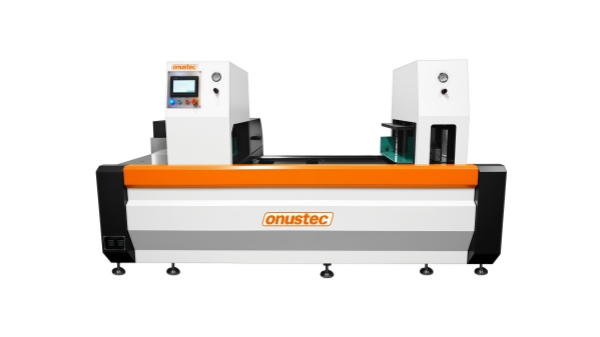
Every growing shop eventually hits a severe production wall. Traditional manual or semi-auto saws create frustrating daily bottlenecks. Staging times drag on indefinitely. Manual measurement errors cause expensive delays and rework. You rely heavily on highly skilled veteran operators. When these experts retire or take vacations, your production grinds to a halt. You must assess your operation using standard Lean Manufacturing principles. Map your value stream to find the exact constraint in your workflow.
You must carefully evaluate your core operational needs. Does your shop need automation to handle repetitive high-volume runs? Or do you need it to standardize complex, custom geometries? High-volume shops benefit from speed. Custom shops benefit from exact digital replication.
Dense materials require serious mechanical power. Processing thick stone, solid hardwoods, or heavy alloys demands robust machinery. Upgrading to a Heavy Duty CNC Automatic Saw often becomes an absolute necessity here. It maintains spindle lifespan over thousands of duty cycles. It also ensures pristine cut quality across rugged materials. Light-duty machines will fail quickly under these harsh conditions.
Automation delivers measurable gains across your entire production workflow. Let us examine the immediate benefits you can expect.
First, consider the drastic reductions in raw material waste. Integrated CAM nesting software maximizes your overall yield. You often reduce the number of raw slabs or sheets required per job. This direct reduction lowers your monthly material expenses significantly. Manual cutting simply cannot compete against algorithmic nesting.
Next, look closely at intelligent labor reallocation. CNCs do not necessarily replace your valuable workers. Instead, they allow highly paid craftsmen to step away from repetitive cutting. You can seamlessly move them into high-margin finishing, custom assembly, or quality control roles. This maximizes the revenue generated per employee.
Precision and repeatability also soar to new heights. Automation completely eliminates human error in repetitive cuts. Every single piece matches your digital CAD file perfectly. This slashes your rejection rates.
Finally, you gain massive complex capability expansion. Introducing a Multi Angle CNC Automatic Saw completely changes the game. It allows for intricate miters, bevels, and compound angles in a single setup. This drastically reduces part handling time. It also opens doors to highly profitable architectural millwork contracts.
Organize your scrap bins to easily recycle or sell offcuts.
Calibrate your nesting software parameters weekly to ensure optimal margins.
Train operators to spot tooling wear early before cut quality degrades.
Maintain a strict schedule for spindle lubrication and general upkeep.
Buyers often focus solely on the initial machine price tag. This represents a critical financial mistake.
You must prepare for the dreaded "hidden invoice" of total cost of ownership (TCO). Secondary costs frequently shock first-time buyers. You will pay for ongoing CAM software subscriptions. You will constantly replace vacuum pods and high-end tooling. You might also need expensive phase converters or upgraded electrical panels. Your building must supply adequate, clean three-phase power.
Facility and footprint limitations also pose major logistical hurdles. A Large CNC Automatic Saw demands substantial factory floor space. You need room for the machine itself. You also need ample loading clearances and wide forklift turning radii. Large staging areas for finished parts are absolutely mandatory. Cramped spaces lead to workflow disasters.
Do not underestimate the massive software and maintenance learning curve. CNCs are never simple "print" buttons. You will face a harsh initial loss of productivity during the setup phase. Troubleshooting complex tool-paths takes time, training, and patience. Routine maintenance becomes your new daily reality. You must manage lubrication, sensor calibration, and strict dust collection protocols.
Finally, beware of the severe single point of failure risk. If your automated saw goes down, production stops. If you eliminated your manual saws entirely, you cannot fulfill orders. You must keep backup options available.
Ignoring monthly consumable tooling budgets in initial cost forecasts.
Placing the machine too close to walls, thereby blocking forklift access.
Assuming veteran manual sawyers will instantly master complex CAD/CAM software.
Failing to upgrade the factory dust collection system beforehand.
Choosing the right machine architecture completely defines your future success. You must define your specific requirement based strictly on your product lines.
Many growing shops start by evaluating the standard industry benchmark. A 3-Axis CNC Automatic Saw is often completely sufficient for flat panel processing. It handles standard cabinetry and basic countertops beautifully. However, complex 3D carving or continuous beveling requires 4-axis or 5-axis articulation. Buying more axes than you need wastes precious capital. Buying too few invites the dreaded "I WISH" syndrome. You will quickly wish you had purchased greater capabilities.
Your physical hardware relies entirely on your digital software ecosystem. A machine is only as capable as the code driving it. Seamless software compatibility is absolutely critical. Ensure the new equipment communicates flawlessly with your existing shop design software. Whether you use AutoCAD, Cabinet Vision, or specialized stone software, test the integration first. A bad post-processor ruins good hardware.
| Configuration Type | Primary Application | Complexity Level | Relative Cost |
|---|---|---|---|
| 3-Axis System | Flat panels, basic cabinetry, simple 2D shapes | Low to Medium | Baseline ($$) |
| 4-Axis System | Cylindrical carving, basic angled joinery | High | Moderate ($$$) |
| 5-Axis System | Compound angles, architectural millwork, complex molds | Very High | Premium ($$$$) |
Shop owners need a rigorous decision framework to justify this massive investment.
Start with a highly data-driven comparison. Run a detailed time-study on a standard, high-frequency job. Compare your current manual labor hours against vendor-provided estimates. Look closely at the promised CNC time and new material yield. Do not guess these numbers. Use actual stopwatch data from your floor.
Next, strictly evaluate your cash flow versus debt service. Do your projected monthly labor and material savings exceed your equipment financing? You must also factor in the permanent monthly tooling wear costs. If the clear savings outpace the total costs, the investment makes financial sense.
If your cash flow remains unstable, consider a safer interim alternative. You can partner with larger local CNC shops to outsource your cutting. This strategy allows you to keep high-margin assembly and finishing entirely in-house. It vastly reduces your upfront capital risk. You can patiently build the necessary cash reserves for future automation.
| Financial Metric | Manual Process (Current) | Automated Process (Projected) | Action Required |
|---|---|---|---|
| Material Waste | High (15-20% scrap) | Low (5-8% scrap via nesting) | Calculate monthly dollar savings from recovered material. |
| Direct Labor Cost | 3 Operators full-time | 1 Operator + 2 reassigned | Calculate added profit from reassigned finishing labor. |
| Monthly Overhead | Standard utilities & blades | Software subs, power, high-end tools | Add these hidden TCO figures to your monthly debt payment. |
Bringing automated sawing in-house dramatically transforms your entire production landscape. However, it requires serious financial and operational commitment. The ideal buyer profile includes established shops boasting high utilization rates. You need ample factory space for seamless material logistics. You must also be fully prepared for a rigorous digital workflow transition.
We advise you to stop looking at shiny marketing spec sheets. Take concrete action today. Ask equipment vendors to run your specific DXF files on their demo machines. Demand hard proof of actual cycle times and exact material yield. Always verify these metrics before you ever request a formal purchase quote.
A: You need far more than just the machine footprint. Factor in wide loading zones for heavy materials. You must also account for forklift turning radii and large dust collection systems. A standard unit often requires at least a 20-by-20-foot dedicated operational cell to function safely.
A: It depends entirely on your material handling equipment. One person can manage the software. However, physically loading heavy slabs requires automated vacuum lifts or secondary personnel. Attempting to manually load heavy sheets alone invites severe workplace injuries.
A: Consumables represent a permanent operational expense. Depending on material density and daily run-time, budget anywhere from $200 to $800 monthly. Cutting dense stone or abrasive alloys destroys tooling faster than cutting softwoods or basic plastics.
A: Used machines offer tempting lower prices. However, they carry high risks of obsolete software controllers and zero factory support. Financing new equipment provides crucial warranty protection, modern CAM software integration, and vital operator training during the setup phase.


