
Views: 0 Author: Site Editor Publish Time: 2025-10-24 Origin: Site


When it comes to high-precision, high-efficiency machining, few solutions match the versatility of a horizontal machining center. Onustec Group, a leading high-end aluminium and facade machine manufacturing specialist, powered by German technical experts, delivers machines that transform production efficiency and quality for manufacturers across industries. By integrating advanced automation and precision engineering, these machines allow shops to achieve consistent quality while reducing production time and costs. This guide offers practical insights into horizontal machining centers, illustrating their applications, key benefits, and essential considerations for selecting the right machine for your shop.
A horizontal machining center (HMC) is a CNC machine tool where the spindle axis is oriented horizontally. Unlike vertical machining centers (VMCs), where the spindle points downward, HMCs hold the workpiece horizontally on a rotary table or pallet, allowing machining from multiple sides without repositioning. This configuration significantly improves accessibility for complex geometries and long workpieces, optimizing chip evacuation and tool longevity.
In addition, HMCs often feature enclosures designed to manage coolant and chips efficiently, creating a cleaner working environment and reducing downtime caused by maintenance interruptions. Unlike VMCs, where chips tend to accumulate around the spindle and require manual clearing, HMCs rely on gravity to remove debris naturally, enhancing tool life and surface quality.
Modern HMCs usually operate on 3 to 5 axes, with some advanced systems integrating 6-axis capabilities for highly intricate parts. Standard workholding involves pallets mounted on rotary tables, which can rotate and index automatically to expose different faces of a part to the spindle. This flexibility reduces the number of setups and allows simultaneous machining of multiple components.
Additionally, some HMCs incorporate dual-pallet or multi-pallet systems, enabling one pallet to be loaded while the other is being machined. This feature is particularly valuable in high-volume production environments, where minimizing downtime directly impacts productivity and profitability.
HMCs excel in producing parts that demand precision, complex geometries, and repeatability. In the automotive sector, components such as engine blocks, transmission housings, suspension arms, and brake components benefit from horizontal machining due to improved chip removal and multi-sided access. Aerospace applications include structural components, landing gear brackets, turbine housings, and aerospace-grade aluminum parts, where tight tolerances and surface quality are critical. Heavy equipment manufacturers rely on HMCs for large frames, hydraulic components, and gear housings, where heavy cuts and long tools are common.
The adaptability of HMCs allows manufacturers to switch between materials, from aluminum to hardened steels, without compromising cycle times or surface finishes, making them ideal for diverse production lines.
While vertical machining centers are versatile and generally easier to program for simple parts, HMCs outperform VMCs in scenarios involving multi-sided machining or extended cutting tools. When parts require machining on multiple faces, HMCs reduce the number of setups, mitigating errors caused by repositioning. Additionally, longer cutting tools are better supported in a horizontal configuration, reducing deflection and enhancing surface finish.
Manufacturers handling complex assemblies, deep cavities, or high-volume production often find HMCs provide faster throughput, lower tool wear, and higher consistency compared to traditional VMCs. Shops producing large aluminum panels or deep cavities, for instance, experience fewer scrap parts and higher overall yield thanks to the HMC design.
One of the most noticeable benefits of a horizontal machining center is superior chip flow management. Chips naturally fall away from the cutting zone due to gravity, minimizing re-cutting and preventing damage to the workpiece or tool. This leads to smoother surfaces, more consistent finishes, and fewer manual interventions to clear chips.
Furthermore, the improved chip evacuation supports more aggressive cutting strategies, allowing manufacturers to reduce cycle times without sacrificing precision. For aerospace or automotive components where surface integrity affects assembly and performance, the HMC’s chip management is a significant advantage. Enhanced coolant delivery systems in Onustec HMCs further optimize thermal control, maintaining tight tolerances even during prolonged machining.
HMCs also minimize the number of setups required to complete a part. With pallet rotation and multiple-axis capabilities, operators can machine several faces in a single setup, dramatically reducing cycle time and part touch. Fewer setups translate into higher spindle-on time, which directly improves overall productivity.
Tool life is enhanced as well. Horizontal orientation reduces bending forces on long tools and promotes consistent cooling and lubrication, lowering the risk of premature wear. Manufacturers experience fewer tool changes, lower operating costs, and better consistency across production runs. The combination of reduced setups, extended tool life, and high spindle utilization contributes to measurable ROI for high-volume production environments.
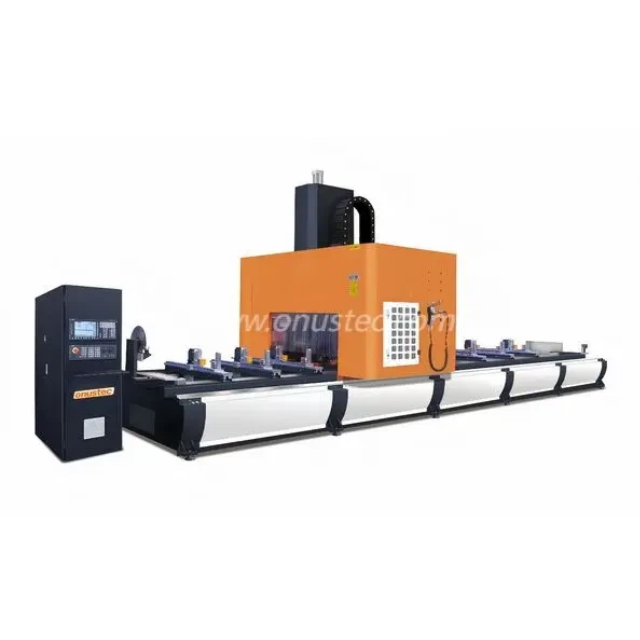
Selecting the right HMC begins with understanding your shop’s production requirements. Work envelope dimensions must accommodate the largest parts you plan to machine while allowing sufficient clearance for tool changes and fixtures.
Pallet and pallet pool options influence throughput significantly. Larger pallet pools enable continuous production with minimal manual intervention. Spindle specifications—power, torque, and speed range—determine which materials and cutting conditions the machine can handle efficiently. High-power spindles are essential for heavy cuts, while high-speed spindles support fine finishing and light materials.
Beyond size, consider rigidity and vibration damping. Onustec’s HMCs are engineered to maintain high stability during heavy cuts, providing repeatable precision for demanding production schedules.
Automation features such as robotic loading systems, automatic tool changers, and integrated pallet systems enhance HMC efficiency. When evaluating machines, consider how readily the system can integrate automation to suit future production demands.
Equally important are tooling systems and coolant delivery. Modular tool systems facilitate fast tool changes and increase flexibility. Advanced coolant and filtration systems maintain cutting conditions, prolonging tool life and maintaining surface quality while keeping maintenance requirements low. Onustec Group ensures that every HMC integrates seamless automation compatibility and optimized tool handling for maximum productivity.
Investment in a horizontal machining center is justified by the efficiency gains it offers. Reduced setups, minimized part touch, and higher spindle utilization contribute to substantial cycle-time savings. By calculating these efficiencies against production volume, shops can estimate the ROI accurately.
For example, in multi-sided automotive components, HMCs can reduce total production time by up to 30–40% compared to multiple VMC setups, accelerating return on investment and improving order fulfillment capabilities. In aerospace applications, high-value parts experience lower scrap rates due to fewer handling errors, further enhancing the economic benefits of HMC adoption.
Total cost of ownership includes service agreements, maintenance, and spare-part availability. Choosing an HMC supplier with a reliable support network ensures minimal downtime and quick resolution of technical issues. Long-term partnerships with manufacturers like Onustec Group guarantee that parts and service align with production schedules, safeguarding continuous operation and preserving machine value.
Onustec Group’s horizontal machining centers are engineered with German precision and craftsmanship, delivering high efficiency, durability, and automation readiness. Typical applications span automotive, aerospace, and heavy equipment components, providing consistent surface finish and dimensional accuracy.
Clients benefit from optimized pallet systems, robust spindle designs, and advanced software integration that maximizes throughput and simplifies programming. Real-world examples include machining of engine blocks with high precision and minimal setup changes, and aerospace brackets that maintain tolerances despite complex geometries. For more detailed specifications, request our comprehensive spec sheet or contact our technical team for a consultation.
Selecting the right horizontal machining center involves balancing work envelope, spindle power, automation capabilities, and total cost of ownership against production requirements. Onustec Group provides high-end solutions designed for precision, efficiency, and long-term reliability. Explore our range of machines, request a quote, or book a demo today to discover how our technology can elevate your manufacturing operations. Contact us to discuss your specific needs and receive tailored guidance.
1. What types of parts are best suited for horizontal machining centers?
Parts requiring multi-sided machining, deep cavities, long tools, or high-volume production benefit most from HMCs. Industries such as automotive, aerospace, and heavy equipment frequently use HMCs for these applications.
2. How do HMCs improve tool life compared to VMCs?
Horizontal orientation reduces bending forces on long tools, promotes consistent cooling and lubrication, and prevents chip re-cutting, all of which contribute to extended tool life.
3. What should I consider when evaluating pallet options?
Consider pallet size, load capacity, and whether a pallet pool or automated rotation system is supported. These factors influence throughput, setup frequency, and overall production efficiency.
4. How can Onustec Group’s HMCs enhance production efficiency?
Onustec Group’s machines combine high-precision spindles, optimized chip flow, advanced automation, and German-engineered software to maximize spindle-on time, reduce setups, and deliver consistent quality across production runs.

