
Views: 0 Author: Site Editor Publish Time: 2025-11-04 Origin: Site


Modern manufacturing demands high-precision, high-efficiency machines that can deliver consistent results for complex parts. The belt spindle cnc vertical machining center has emerged as a critical technology for achieving these goals, particularly in industries such as aluminium fabrication and façade manufacturing. Onustec Group, recognized globally as a high-end aluminium and façade machine specialist, leverages decades of German engineering experience to design belt spindle systems that combine speed, rigidity, and operational reliability. Partnering with Siemens AG and camProx OHG, Onustec ensures that every machine integrates cutting-edge motor and spindle technology. The belt spindle system allows manufacturers to optimize feed rates, improve surface finish, and extend tool life while maintaining machine durability over prolonged operational cycles.
The evolution of belt spindle technology represents a careful balance between mechanical design, thermal management, and vibration control. By understanding the anatomy of a belt spindle, the factors affecting speed and rigidity, and the downstream manufacturing impacts, operators and engineers can make informed decisions about machine selection, retrofitting options, and performance optimization.
A belt spindle system relies on a combination of precisely engineered pulleys, high-strength belts, and carefully selected bearings to transmit torque from the motor to the spindle effectively. The pulleys, typically machined from high-grade steel or aluminium, are designed to tight tolerances to prevent slippage, which could negatively impact surface finish and part accuracy. Belt materials, often reinforced with synthetic fibers or carbon strands, provide flexibility while maintaining tensile strength, allowing high-speed rotation without overstretching.
Bearings within the spindle are critical for maintaining alignment and supporting axial and radial loads. Hybrid ceramic bearings are frequently used in high-performance machines to reduce friction and withstand high rotational speeds. Onustec CNC vertical machining centers utilize motor placement strategies that minimize vibration and heat accumulation, positioning the motor to optimize torque transmission while ensuring smooth acceleration and deceleration.
The interaction between pulleys, belts, and bearings determines the overall dynamic behavior of the spindle. A well-designed belt spindle ensures that energy transfer is smooth, torque remains consistent, and the spindle can maintain high RPMs without inducing vibration-related errors. This precision engineering forms the foundation of superior machining performance in aluminium and façade components, which often require both high speed and extreme dimensional accuracy.
Designing a belt spindle system is an exercise in balancing high-speed capability with rigidity and thermal stability. Belt materials play a significant role in performance: reinforced polyurethane or carbon fiber belts provide the necessary strength and elasticity, accommodating high rotational speeds while reducing vibration. Pulley ratios, determining the mechanical advantage between the motor and spindle, must be optimized for each application, allowing fine control over spindle RPM and torque output.
Thermal management is another critical consideration. High-speed operation generates significant heat, which can lead to thermal expansion in the spindle, belts, or bearings. Onustec addresses this with integrated cooling systems, including liquid channels within the spindle housing and precision airflow management, which maintain consistent operating temperatures. These features prevent thermal distortion, maintain tool alignment, and ensure repeatable accuracy across long production runs.
Additionally, spindle rigidity is influenced by structural support within the CNC machine. Onustec vertical machining centers feature reinforced spindle housings and vibration-dampening mounts, ensuring that high-speed operations do not compromise part tolerances. Engineers designing belt spindle systems must carefully analyze these parameters to achieve an optimal balance between speed, torque, and structural integrity.
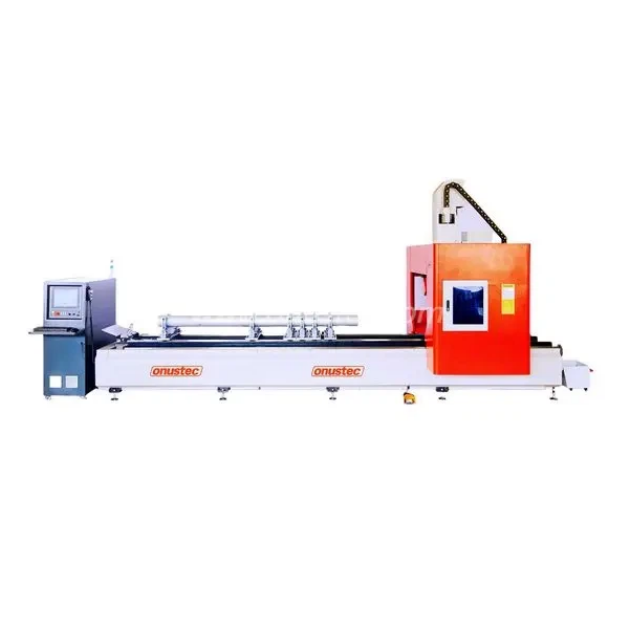
Selecting a belt spindle has profound implications for both machining quality and operational efficiency. Belt spindles typically provide smoother torque delivery compared to other drive systems, which reduces chatter and vibration during cutting. For delicate aluminium panels or façade components, this translates directly into superior surface finishes with fewer defects or tool marks.
Cycle time is also affected by spindle choice. High-speed belt spindles can maintain elevated feed rates without sacrificing accuracy, allowing manufacturers to reduce production time for each part. Longer tool life is another advantage: reduced vibration and smooth torque transfer minimize microfractures on cutting edges, enabling tools to maintain sharpness for extended periods. This combination of improved surface finish, faster cycle time, and extended tool life makes belt spindle CNC vertical machining centers highly desirable for high-volume, precision manufacturing environments.
Moreover, the predictable behavior of belt-driven spindles enables engineers to optimize feeds and speeds more aggressively than with some other drive types. By fine-tuning parameters for specific materials and cutting strategies, manufacturers can achieve a higher rate of material removal without incurring excessive wear on tools or spindle components.
Manufacturers with existing CNC vertical machining centers can achieve performance gains by retrofitting with belt spindle systems. Retrofits typically involve replacing the original spindle, adding optimized pulleys and belts, and adjusting motor positioning. This approach provides measurable improvements in speed, precision, and surface finish at a fraction of the cost of purchasing a completely new machine.
However, purchasing a new Onustec belt spindle CNC vertical machining center offers additional advantages. New machines integrate belt spindle systems into a holistic design, including optimized structural rigidity, vibration damping, and advanced thermal management. These integrated solutions deliver consistent high-speed performance and longer-term reliability, often exceeding the incremental gains achievable through retrofitting alone. Companies must evaluate operational needs, production volume, and precision requirements to determine whether retrofitting or acquiring a new machine provides the best return on investment.
A high-performance belt spindle system requires proactive maintenance and a clear understanding of service intervals. Operators should consult suppliers regarding recommended inspection schedules, belt replacement intervals, and bearing maintenance. Onustec Group provides comprehensive documentation and technical support, guiding users through preventive maintenance procedures that preserve machine performance and extend operational life.
Belt life depends on material quality, operating conditions, and load cycles. By following the supplier’s guidelines, manufacturers can prevent premature wear and minimize unplanned downtime. Warranty coverage should include both mechanical components and service, providing assurance that the machine can handle industrial workloads with minimal risk. Regular maintenance, combined with technical support from a trusted supplier like Onustec, ensures that belt spindle CNC vertical machining centers continue to deliver precise, efficient results throughout their service life.
Advanced belt spindle cnc vertical machining center technology has transformed precision manufacturing, particularly in high-speed aluminium and façade applications. Onustec Group leverages German engineering expertise, decades of R&D experience, and strategic partnerships with Siemens AG and camProx OHG to deliver machines that maximize productivity, accuracy, and tool longevity. Whether considering a new installation or an upgrade to an existing machine, manufacturers benefit from superior spindle design, effective thermal management, and smooth torque transmission. For more information or to request a personalized quote, please contact us.
Q1: What advantages do belt spindles offer over other spindle types?
A1: Belt spindles deliver smoother torque, reduced vibration, improved surface finish, and longer tool life, making them ideal for precision aluminium and façade machining.
Q2: How frequently should belt spindles be maintained?
A2: Maintenance should follow manufacturer recommendations, typically including belt tension checks, bearing lubrication, and inspection for wear or damage.
Q3: Is retrofitting an existing CNC vertical machining center with a belt spindle cost-effective?
A3: Yes, retrofitting can enhance speed, precision, and surface finish while reducing downtime, though new machines may provide additional integrated benefits.
Q4: How does belt spindle technology affect tool life?
A4: By reducing vibration and ensuring consistent torque, belt spindles minimize cutting tool wear, extending operational life and lowering production costs.

