
Views: 0 Author: Site Editor Publish Time: 2025-10-28 Origin: Site


High-precision manufacturing environments demand machinery capable of delivering exceptional accuracy, repeatability, and reliability. Onustec Group, the leading specialist in high-end aluminum and facade machinery, leverages decades of German technical expertise to design and manufacture advanced machining solutions that meet the most demanding industrial requirements. Among its flagship products, the cnc horizontal machining center stands out for its ability to combine cutting-edge CNC technology, multi-axis capabilities, and Industry 4.0 readiness into a single platform. These machines enable manufacturers to produce highly precise components efficiently, reduce production cycles, and maintain consistent quality across high-volume operations. By focusing on advanced spindle technology, thermal compensation, intelligent tool management, and integrated monitoring systems, Onustec ensures that every component machined on its horizontal centers meets the highest industry standards while minimizing material waste and operational downtime.
The Onustec philosophy emphasizes blending German craftsmanship with innovative design, resulting in machines that deliver both performance and reliability. Their horizontal machining centers are particularly suited for industries requiring intricate geometries, multi-sided access, and stringent tolerances, such as aerospace, automotive, architectural aluminum fabrication, mold-making, and industrial tooling. By integrating advanced CAM strategies, predictive maintenance tools, and real-time monitoring systems, Onustec empowers manufacturers to optimize every aspect of the machining process, from setup to final inspection.
At the core of any machining center lies the spindle, a component critical to achieving precision and surface finish quality. Onustec CNC horizontal machining centers are equipped with high-speed, rigid spindles that excel in both roughing and finishing operations. These spindles incorporate precision bearings, balanced rotor designs, and reinforced housing structures to minimize vibration and deflection under heavy cutting loads. This allows the machine to maintain tight tolerances even at high speeds and with aggressive material removal rates. For manufacturers, this translates into parts that consistently meet dimensional requirements, smoother surface finishes, and reduced post-machining processing.
High-speed spindles also enhance productivity by allowing shorter cycle times without compromising accuracy. By combining high RPM capabilities with robust rigidity, Onustec machines can handle aluminum, steel, and other high-strength alloys efficiently. The integrated spindle monitoring system provides real-time feedback on load, temperature, and vibration, enabling operators to fine-tune machining parameters and avoid premature tool wear or unexpected downtime.
Heat generated during high-speed machining can significantly impact dimensional stability. Even minor thermal expansion of machine components can result in tolerances being exceeded, leading to rework or part rejection. To address this challenge, Onustec incorporates sophisticated thermal compensation technology into its horizontal machining centers. These systems constantly monitor temperature variations in the spindle, worktable, and critical machine components, making real-time adjustments to maintain geometric accuracy. This ensures consistent precision even over long production runs and allows manufacturers to maintain high standards of quality with minimal intervention.
The benefit of thermal compensation is particularly pronounced in the production of large aluminum panels, aerospace components, and other temperature-sensitive parts. By reducing dimensional drift, Onustec machines minimize the risk of assembly issues, material waste, and costly rework, while ensuring that finished components meet or exceed stringent customer specifications.
Efficient tool management is essential for optimizing machining operations. Onustec horizontal machining centers feature intelligent Automatic Tool Changers (ATC) that can accommodate a wide variety of cutting tools, from standard end mills to specialized form cutters. The ATC system works seamlessly with Onustec’s tool management software, allowing operators to monitor tool usage, schedule automatic replacements, and optimize cutting sequences. This level of control ensures that each part is machined using the optimal tool for its specific operation, improving surface finish, reducing cycle times, and minimizing tool wear.
Advanced tool management also includes the ability to track tool life history and implement predictive replacement schedules. By knowing precisely when a tool needs servicing or replacement, manufacturers can reduce unplanned downtime, maintain consistent machining quality, and extend the overall lifespan of high-value cutting tools. This capability is especially valuable in high-volume production environments where tool reliability directly impacts throughput and profitability.
Many modern components, particularly in aerospace, automotive, and mold-making industries, require complex geometries that cannot be fully machined using traditional 3-axis systems. Onustec CNC horizontal machining centers can be configured with 4th-axis rotary tables or full 5-axis heads to address these requirements. A 4-axis rotary table allows the workpiece to be rotated continuously or indexed between operations, enabling precise machining of cylindrical components, gears, and other symmetrical features. Full 5-axis heads add simultaneous multi-directional movement, allowing the cutting tool to approach the workpiece from multiple angles without the need for repositioning.
The flexibility provided by 4th and 5th-axis configurations significantly reduces setup times and eliminates the risk of errors caused by manual repositioning. This capability is critical for producing intricate parts such as turbine blades, automotive engine components, or precision architectural elements where surface finish and geometric accuracy are paramount. By allowing complex shapes to be machined in a single setup, manufacturers can achieve higher throughput, lower labor costs, and greater overall efficiency.
Beyond precision, multi-axis capabilities offer substantial workflow improvements. Simultaneous machining on multiple faces of a part reduces handling and repositioning, lowering the risk of operator error and increasing throughput. For high-volume production lines, this translates into faster cycle times, improved consistency, and reduced scrap rates. The combination of multi-axis machining and automated tool management ensures that every operation is executed efficiently, enabling manufacturers to meet tight deadlines while maintaining stringent quality standards.
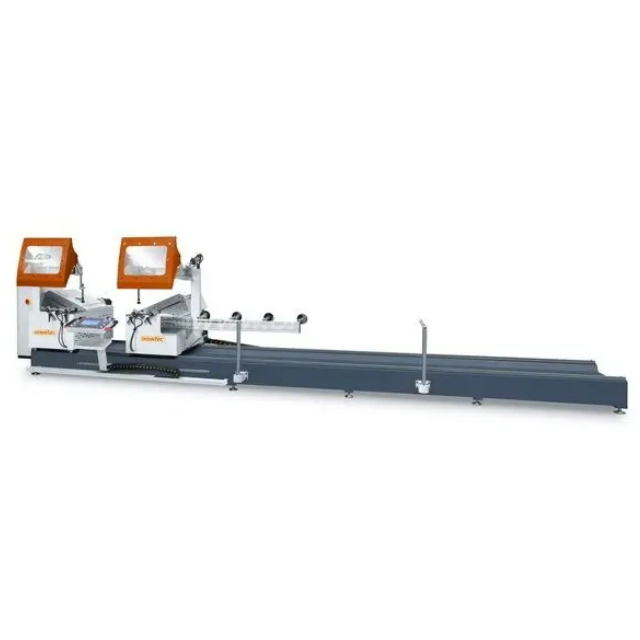
Machine health is critical to maintaining high-precision operations. Onustec horizontal machining centers integrate a comprehensive suite of sensors to monitor spindle load, vibration, and axis performance in real-time. These sensors feed data into predictive maintenance systems, alerting operators to potential issues before they lead to downtime. Detecting abnormal vibrations early prevents premature wear, tool breakage, and unscheduled stoppages, protecting both the machine and the finished components.
Predictive maintenance also supports cost efficiency. By anticipating maintenance needs, manufacturers can schedule service during planned downtimes, avoid emergency repairs, and maintain consistent production schedules. This proactive approach increases machine availability and extends the service life of critical components, ensuring long-term reliability.
Onustec CNC horizontal machining centers are designed for the smart factory of the future. They are equipped with Industry 4.0-ready interfaces that allow seamless integration with enterprise resource planning (ERP) systems, production monitoring software, and cloud-based analytics platforms. Real-time machine data, including cycle times, tool usage, and operational efficiency, can be analyzed to optimize workflows, enhance decision-making, and improve overall productivity.
This connectivity also enables manufacturers to implement advanced process control strategies, monitor performance across multiple machines, and maintain digital records of every component produced. The resulting insights help optimize production schedules, reduce energy consumption, and maintain traceability, supporting quality control and regulatory compliance.
Advanced computer-aided manufacturing (CAM) software is essential for realizing the full potential of Onustec CNC horizontal machining centers. CAM systems allow operators to program complex multi-sided operations efficiently, simulate toolpaths, and pre-validate machining strategies before actual production. These tools reduce the need for trial-and-error programming, minimize the risk of collisions, and optimize cutting strategies for improved cycle times and precision.
Onustec collaborates with leading CAM providers to ensure seamless integration with its machines, allowing for advanced simulation of multi-axis operations, real-time toolpath optimization, and verification of machining sequences. The result is a streamlined workflow that maximizes machine efficiency while maintaining exceptional part quality.
Correct fixture placement is critical to achieving high precision. Onustec CAM strategies incorporate detailed fixture modeling and collision detection, enabling operators to simulate machining operations in a virtual environment. By verifying tool clearance, workpiece orientation, and fixture placement before actual machining, manufacturers can prevent errors, reduce scrap, and maintain tight tolerances consistently. This capability is particularly valuable for intricate aerospace, automotive, and architectural components, where even minor deviations can compromise assembly or function.
Onustec’s expertise in aluminum machining is reflected in its specialized horizontal machining centers. Optimized cutting parameters, advanced fixture designs, and high-speed spindles allow for efficient production of facade panels, frames, and other aluminum components. Thermal compensation, multi-axis capabilities, and intelligent tool management ensure consistent surface quality, precise edges, and uniform dimensions across large-scale production runs. Manufacturers benefit from lower material waste, faster production cycles, and high-quality finishes that meet architectural and structural requirements.
Multi-face machining in a single setup drastically reduces material handling, repositioning errors, and labor costs. Onustec CNC horizontal machining centers offer repeatable precision across thousands of parts, allowing manufacturers to scale production without compromising quality. The combination of smart tool management, predictive maintenance, and advanced CAM strategies ensures every operation runs smoothly, maximizing throughput while minimizing waste.
In a high-volume production environment for architectural aluminum components, Onustec’s CNC horizontal machining centers enabled a significant reduction in rework. Multi-axis machining allowed complex geometries to be completed in fewer setups, while integrated CAM software optimized toolpaths and verified operations virtually before cutting. As a result, production efficiency improved, scrap rates decreased, and finished components consistently met stringent tolerance requirements.
For manufacturers producing large quantities of precision parts, repeatability is paramount. Onustec’s combination of thermal compensation, vibration monitoring, multi-axis control, and CAM-driven planning ensures uniform tolerances across thousands of components. These capabilities not only improve product quality but also enhance brand reputation and customer satisfaction, positioning Onustec CNC horizontal machining centers as an essential solution for high-precision manufacturing.
The cnc horizontal machining center from Onustec Group exemplifies the perfect integration of German engineering, advanced CNC technology, and production-driven innovation. High-speed spindles, multi-axis machining, predictive maintenance, and CAM integration allow manufacturers to achieve superior precision, reduce rework, and optimize workflow efficiency. Companies seeking to elevate production quality, increase throughput, and minimize operational downtime will find Onustec solutions invaluable. For detailed specifications or personalized technical consultation, contact us today to learn how our CNC technology can transform your manufacturing operations.
Which industries benefit most from CNC horizontal machining centers?
CNC horizontal machining centers are ideal for aerospace, automotive, aluminum facade fabrication, mold-making, industrial tooling, and other applications requiring multi-sided precision machining.
How does thermal compensation enhance part accuracy?
Thermal compensation continuously adjusts for heat-induced expansion, ensuring consistent dimensions and surface quality throughout prolonged machining operations.
Can multi-axis machining improve production efficiency?
Yes, 4th and 5th-axis machining allow complex geometries to be completed in fewer setups, reducing cycle times, minimizing repositioning errors, and improving workflow efficiency.
What is the role of predictive maintenance sensors?
Sensors monitor spindle load, vibration, and other critical parameters, allowing early detection of potential issues, preventing downtime, and extending the life of tools and machine components.

