
Views: 0 Author: Site Editor Publish Time: 2026-09-22 Origin: Site


Scaling aluminum production forces a critical equipment decision. Selecting the wrong machine architecture leads to ruined tolerances, excessive tool wear, or severe production bottlenecks. You cannot simply ask which machine is objectively best. Instead, you must determine which architecture aligns with your specific aluminum stock. Different shops handle flat sheets, hollow profiles, or solid blocks. Each material type demands specific cutting dynamics. Cycle times dictate your shop's profitability. Every manager faces unique production demands.
This guide breaks down the operational realities of using a cnc machine aluminum cutting setup across three dominant architectures. We will explore how different designs handle cutting forces. We will look at how material properties influence spindle choices. Procurement and production managers can use this information to make evidence-based equipment investments. You will learn how to match your primary material form to the exact machinery needed for peak efficiency. Understanding these distinctions prevents costly procurement mistakes. Proper alignment between material and machine ensures long-term operational success.
CNC Routers: Best for large-format, high-speed nesting of flat aluminum sheets; vulnerable to deflection on thick, heavy stock.
CNC Machining Centers: The standard for high-torque milling, drilling, and tapping on complex extrusions or solid blocks requiring rigid workholding.
Double Mitre Saws: Unmatched for high-volume, precise angle-cutting of linear profiles (windows, doors, facades) where milling is secondary or unnecessary.
Decision Driver: Your primary material form (Sheet vs. Extrusion) and operation ratio (Routing vs. Milling vs. Slicing) dictate the optimal ROI path.
Material form heavily dictates your ideal machine architecture. Aluminum possesses unique material properties. It acts gummy during machining operations. It remains highly heat-sensitive under continuous cutting friction. These specific traits require precise spindle speeds. They also demand specialized workholding methods depending entirely on your chosen stock. If you misapply a cutting method, chips will quickly weld to the tool surface. This phenomenon destroys expensive cutters instantly. It also ruins the surface finish of your final parts.
Flat Stock (Sheets/Plates): Processing flat panels requires very specific machine geometry. You must utilize large table sizes to support the entire panel. You need strong vacuum hold-down systems. These vacuums keep thin material completely flat during aggressive cuts. High-speed spindles excel in this environment. They spin small cutters rapidly across wide surface areas. This combination achieves excellent nesting efficiency.
Linear Stock (Extrusions/Profiles): Hollow or semi-hollow profiles behave differently than flat sheets. They require robust pneumatic clamping mechanisms. Vacuums cannot secure narrow structural shapes. You also need much longer X-axis travel. Many extrusions measure several meters in length. Multi-angle spindle access handles complex geometries easily. Dedicated saw blades slice through hollow sections cleanly. Standard flatbed systems fail when tasked with this linear work.
Success Criteria: You must clearly define how to measure a successful machinery implementation. Rely on quantifiable metrics. Use the following parameters to benchmark your process:
Cycle time reduction: Evaluate how quickly parts move from raw stock to a finished state.
Tolerance consistency: Ensure dimensions remain identical across hundreds or thousands of identical parts.
Operator training requirements: Measure the exact time needed to train shop staff on machine controls and CAM software.
Chip evacuation efficiency: Confirm your extraction system removes aluminum flakes fast enough to prevent recutting.
Meeting these criteria guarantees your equipment matches your shop's actual production flow. Ignoring them leads to frequent maintenance stops and frustrated operators.
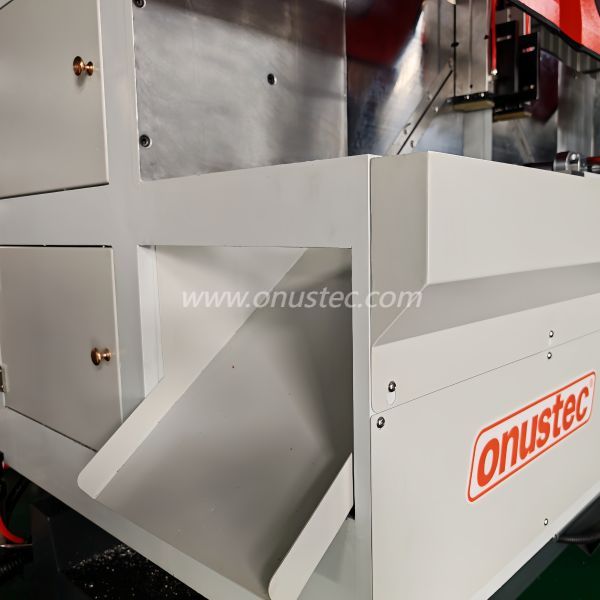
Core Engineering & Strengths: CNC Router Machining Centers utilize a wide gantry-style architecture. Engineers design this framework to maximize the X and Y travel footprint. This allows operators to load massive sheets of raw material. They feature specialized high-RPM spindles. These spindles typically range from 18,000 to 24,000 RPM. Such rapid rotational speeds suit small-diameter end mills perfectly. High speeds ensure low chip loads per tooth. They excel at rapid material removal on broad, flat surfaces. You will find them ideal for nesting operations. Shops use them to cut composite panels efficiently. They easily handle thin aluminum sheets. They perform light pocketing tasks with exceptional speed and fluid motion.
Implementation Realities & Adoption Risks: You must acknowledge the specific adoption risks. The main risk involves a fundamental lack of structural rigidity. Gantry routers lack the heavy cast-iron mass found in traditional mills. This lighter frame leads to mechanical chatter. Chatter causes poor surface finishes on thick, heavy aluminum stock. You cannot push a router like a mill. Proper coolant application remains absolutely mandatory. Minimum Quantity Lubrication (MQL) systems prevent catastrophic chip welding. Mist systems apply a tiny amount of oil directly to the cutting zone. If you attempt to cut dry, aluminum melts onto the bit rapidly. This snaps the tool and damages the spindle bearings.
Target Application: Specific industries thrive on this flatbed technology. Aerospace manufacturers process large aluminum skins on these routers. Sign-making shops depend on them to cut large architectural letters. ACM panel processing relies heavily on this approach. Marine manufacturers cut boat hulls from large aluminum plates using these exact flatbed systems.
Core Engineering & Strengths: CNC Profile Machining Centers utilize heavy cast-iron frames. Many builders use massive steel weldments instead. Engineers build these rigid structures to absorb intense milling vibrations. They feature lower RPM, incredibly high-torque spindles. These robust spindles utilize BT30, ISO30, or heavier tooling standards. This rigid tooling enables aggressive material removal. Operators can perform deep drilling operations safely. The machines handle rigid tapping without breaking taps. They integrate complex rotary indexing smoothly into the workflow. Many models offer advanced 3-axis, 4-axis, or full 5-axis capabilities. You can process multiple sides of a long extrusion without manually repositioning the part. This saves immense amounts of setup time.
Implementation Realities & Adoption Risks: Be aware of the practical implementation challenges. These machines require higher initial capital expenditures. They demand significantly larger floor space in your facility. You must also possess or hire advanced CAM programming skills. Multi-axis toolpaths confuse inexperienced operators easily. Tooling demands remain incredibly strict. You need premium carbide tooling to maximize machine potential. You must enforce strict tool-life management protocols. Using dull tools on highly rigid machines breaks parts quickly. It also places severe stress on spindle motors. You cannot cut corners on tooling quality here.
Target Application: Heavy industries demand this specific level of rigidity. Automotive chassis components require extreme dimensional accuracy. Industrial heat sinks need precise, deep cuts through solid blocks. Complex structural aluminum extrusions rely on this multi-axis capability. They need perfectly aligned holes and pockets for accurate joining features. Electric vehicle battery trays utilize this technology heavily today.
Core Engineering & Strengths: A 45-Degree High-Precision Aluminum CNC Double Mitre Saw provides unmatched linear throughput. Manufacturers purpose-build these systems for high-volume slicing tasks. They feature two completely independent saw heads. One head remains securely fixed in place. The other head moves laterally via precise CNC control. This design allows simultaneous angle cutting on both ends of a profile. They optimize their mechanics for exact angular precision. You easily achieve perfect 45°, 90°, and 135° cuts consistently. They utilize massive blade diameters. These blades often range from 400mm to 600mm across. The large diameter allows the blade to plunge cleanly through thick, hollow extrusions. This guarantees a burr-free finish ready for immediate assembly.
Implementation Realities & Adoption Risks: The primary risk lies in the machine's strict specialization. You cannot perform routing tasks on a saw. You cannot execute pocketing or tapping operations. If you need those specific features, you must buy a secondary machine. Alternatively, you might need a hybrid cutting center. However, the setup efficiency remains absolutely incredible. It drastically reduces cycle times for repetitive framing operations. Single saws simply cannot compete here. Standard mills take far too long to slice linear stock. The double mitre saw shines in pure volume production.
Target Application: Architectural manufacturers depend entirely on this machine's speed. Window and door manufacturing requires thousands of perfect mitres daily. Curtain walls rely on precise framing to maintain structural integrity. Solar panel framing demands rapid, repetitive angle cuts. Architectural aluminum facades also utilize these automated saws for rapid frame assembly. Any industry building square or rectangular frames benefits massively.
You must evaluate your options objectively. We compare the three architectures across crucial production metrics to ensure you select the correct path.
Mitre saws win decisively on sheer volume for simple cuts. They slice through extrusions in mere seconds. A saw easily outpaces a mill in linear processing. Routers win on flat-sheet flexibility. You can nest dozens of varied, complex parts across a large table. The router transitions from one shape to another seamlessly. Machining centers win on complex, multi-operation parts. They drill, tap, and mill in one comprehensive setup. You trade raw cutting speed for unmatched feature versatility.
Compare the acceptable deflection limits of your parts. Heavy stock necessitates the extreme rigidity of a machining center. Gantry routers tend to flex under heavy side loads. This flex ruins dimensional accuracy on thick, solid parts. It induces chatter marks along the cut edge. Profile machining centers hold tolerances tightly even during aggressive roughing. Double mitre saws maintain exceptional high precision. However, they only maintain this precision for angular cross-sections. They do not hold tolerances for milled pockets.
Break down the practical daily requirements for each category. Floor space varies wildly between wide flatbeds and long linear beds. A router needs a wide square area. A saw requires a long, narrow footprint. Consider your tooling replacement frequency carefully. High-speed router bits wear out faster than heavy milling cutters. Evaluate your current operator skill level. Complex 5-axis programming demands specialized, highly paid talent. Simple saw operation requires minimal software training. Ensure you acquire the right CAM licensing for multi-axis machines. Software complexities often delay new machine deployments.
Machinery Capability Comparison Chart
Machine Category | Primary Material Format | Core Operational Strength | Physical Floor Footprint |
|---|---|---|---|
CNC Flatbed Router | Thin Sheets / Composite Panels | High-speed dynamic nesting | Wide (Requires large X/Y space) |
Profile Machining Center | Heavy Extrusions / Solid Blocks | High-torque precision milling | Long (Requires extended X-axis) |
Double Mitre Saw | Linear Hollow Profiles | Simultaneous rapid slicing | Long (Linear track layout) |
Do not over-buy capabilities you will never use. Matching the machine strictly to the task ensures optimal performance.
Never under-spec rigidity when working with solid aluminum. Heavy cuts always demand heavy cast-iron frames.
Audit your last six months of production tasks. This identifies your true operational bottleneck clearly.
Select dedicated machines for volume slicing, but choose multi-axis centers for complex, multi-sided operations.
If eighty percent of your daily work involves straight or angled cuts on extrusions, start with a double mitre saw. If you primarily process flat sheet nesting, specify a high-speed router. If your shop handles multi-sided extrusion milling, invest securely in a profile machining center. Before finalizing a purchase order, take proactive steps. Request detailed cycle-time studies from your vendor. Ask equipment manufacturers to perform live test cuts. You must provide them with your specific aluminum stock. These physical trials prove the machine's true capability in your environment.
A: No. Routing linear cuts takes significantly longer than slicing them with a saw blade. Routers also struggle to hold long, narrow extrusions securely. Vacuum beds work poorly on small surface areas. A saw uses robust pneumatic clamps to grip profiles safely. For volume extrusion cutting, routers remain highly inefficient compared to dedicated mitre saws.
A: You must use Minimum Quantity Lubrication (MQL) or a mist system. Aluminum produces gummy chips during cutting. If you cut dry, friction melts these chips directly onto the cutter. This chip welding ruins the tool and destroys part finishes. MQL provides just enough lubrication to keep the tool clear without flooding the workspace.
A: Yes, if you manufacture complex facades or aerospace parts. A 5-axis machine eliminates manual repositioning. It machines multiple sides of a profile in a single setup. This one-and-done approach drastically reduces part handling times. While the initial capital requirement is higher, the labor savings and accuracy improvements deliver a rapid return on investment.


