
Views: 0 Author: Site Editor Publish Time: 2026-08-16 Origin: Site


Milling aluminum presents unique manufacturing challenges. You cannot simply operate a standard wood router. You cannot expect precision metal parts. Aluminum requires substantially higher machine rigidity. It demands specific spindle speeds. Reliable active cooling systems become completely mandatory. These stringent mechanical requirements directly impact equipment cost. They quickly narrow your available market options.
Determining exactly how much is a cnc machine for aluminum helps you avoid costly purchasing mistakes. We want to move past the frustrating "it depends" answer. This guide provides transparent pricing tiers. It establishes clear ROI evaluation criteria. You will discover exactly what separates a hobbyist toy from an industrial workhorse. We focus heavily on realistic business outcomes. We examine actual production realities rather than inflated marketing claims. You will learn how to evaluate hardware components. You will assess advanced multi-axis options. Ultimately, you will choose a system tailored perfectly for your specific manufacturing floor.
Entry-level desktop routers capable of light aluminum work start between $2,000 and $5,000, but lack production-scale rigidity.
Professional-grade 3-axis CNC machines for aluminum range from $15,000 to $50,000.
Industrial setups, such as a 4-Axis Aluminium CNC Machining Center or a 5-Axis Aluminum CNC Profile Machining Center, typically cost between $60,000 and $150,000+.
Initial purchase price only represents 60-70% of the first year's Total Cost of Ownership (TCO); tooling, software, and facility upgrades make up the rest.
Pricing for aluminum-capable machinery varies wildly. You must align your budget directly against your production demands. Overspending hurts your immediate cash flow. Underspending destroys your daily productivity. Let us examine the three primary categories.
Table: Aluminum CNC Setup Classifications
Machine Category | Typical Price Range | Frame Architecture | Ideal Use Case |
|---|---|---|---|
Desktop & Entry-Level | $2,000 – $10,000 | Lightweight Extrusions | One-off Prototyping, Hobbyist |
Professional / Small Shop | $15,000 – $50,000 | Cast Iron / Heavy Steel | Daily Production, Moderate Volumes |
Industrial Production | $60,000 – $150,000+ | Rigid Gantry / Massive Castings | High-Volume, Aerospace, Continuous Shifts |
Entry-level models typically cost between $2,000 and $10,000. These machines feature lightweight aluminum extrusion frames. They often utilize belt drives or basic ball-screw mechanisms. These systems serve hobbyists perfectly. They handle occasional one-off prototypes well. However, they struggle heavily during continuous metal cutting.
You will face severe limitations regarding vibration. Machinists call this vibration "chatter." Chatter destroys tool life rapidly. It ruins surface finishes. These desktop units require extremely slow feed rates. They limit your maximum depth of cut severely. Most entry-level models also lack active coolant systems. Operators usually resort to manual spray bottles. This manual approach severely limits automated production potential.
Professional-grade systems range from $15,000 to $50,000. Small job shops rely heavily on this category. These machines feature heavy cast iron components. Many utilize thick welded steel frames. They incorporate linear profile guide rails. You will typically find closed-loop stepper motors here. Some models even feature entry-level servo motors.
These upgrades provide massive rigidity improvements. Rigidity allows consistent daily production. You can achieve much higher tolerance requirements. Material removal rates increase significantly. Most professional machines include basic flood coolant capabilities. Some utilize programmable mist coolant systems. These active cooling methods drastically extend your cutting tool lifespan.
Industrial production centers demand budgets between $60,000 and $150,000+. High-volume manufacturing facilities require these massive machines. They feature extremely rigid gantry designs. They incorporate heavy-duty AC servo motors. These motors provide instant torque.
High-speed spindles spin at 18,000 RPM or faster. Advanced chip evacuation systems run continuously. Augers remove metal shavings automatically. These machines run continuous daily shifts without overheating. Aerospace manufacturers use them. Automotive parts suppliers depend on them. The sheer mass guarantees absolute precision during aggressive aluminum milling.
Understanding specific hardware components helps you justify the price tag. Certain features add immense value. Others merely inflate the purchase price unnecessarily. You must evaluate three core hardware variables carefully.
Mass matters significantly during aluminum milling. Aluminum acts like a tuning fork when machined. It creates severe resonance. Machine mass absorbs this harmful resonance. Bolted aluminum extrusions flex under cutting loads. This flex causes immediate chatter.
Cast iron beds resist vibration naturally. Manufacturers cast them in massive molds. They let the iron age to relieve internal stresses. Pouring cast iron costs significantly more money. Shipping massive iron beds adds heavy freight surcharges. However, you cannot fake rigidity. Buying a heavier machine always yields smoother aluminum finishes.
Spindles act as the beating heart of your machine. Low-cost routers utilize standard air-cooled spindles. These basic spindles lack low-end torque. They stall easily during deep aluminum cuts. Standard wood spindles often spin too fast. They melt the aluminum rather than cutting it.
Professional metal-cutting requires specialized spindles. High-torque water-cooled spindles perform best. They maintain strict thermal stability during long operations. Liquid cooling prevents catastrophic overheating. Upgrading to a premium spindle adds thousands of dollars. Yet, it remains an absolutely necessary investment.
Manual tool changes waste massive amounts of time. Adding an Automatic Tool Changer (ATC) commands a premium price. You must choose between linear racks or carousel systems. Linear ATCs sit at the machine rear. Carousel systems ride along the gantry. Carousel types change tools much faster.
ATCs reduce manual operator intervention completely. They slash machine downtime drastically. Your ROI becomes obvious during complex aluminum milling. Complex parts require roughing end mills. They require finishing tools. They need specific chamfer bits. An ATC swaps these seamlessly. A $5,000 ATC upgrade easily pays for itself within six months.
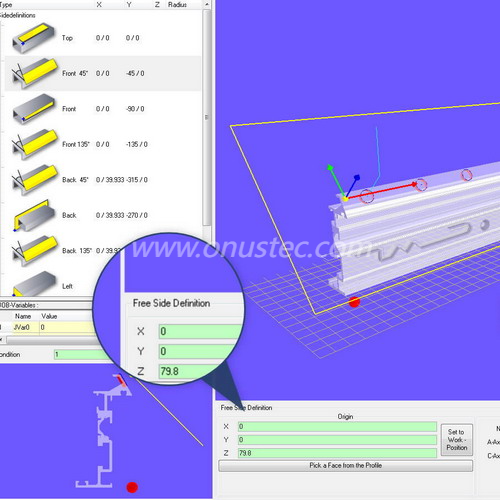
Traditional 3-axis systems handle flat plate work perfectly. However, modern manufacturing often demands complex geometries. Upgrading your axis capabilities requires serious financial commitment. You must understand the specific business cases justifying these massive upgrades.
Adding a rotary axis increases your budget by $10,000 to $30,000. Standard 3-axis machines cut from above. A rotary axis spins the actual material. This allows continuous side milling. You can produce complex cylindrical parts easily.
Many shops process long aluminum extrusions daily. A 4-Axis Aluminium CNC Machining Center becomes completely essential here. It reduces your setup times dramatically. Operators machine multiple sides without executing manual refixturing. Manual refixturing introduces human error. It destroys dimensional accuracy. The 4-axis upgrade eliminates these costly handling mistakes.
True simultaneous 5-axis capability represents a monumental pricing leap. These systems cost anywhere from $80,000 to well over $250,000. You must distinguish between simultaneous 5-axis and basic 3+2 positional systems. Simultaneous machining moves all five axes simultaneously. It crafts incredibly smooth, organic curves.
Aerospace housings demand this capability. Turbine impellers require simultaneous toolpath motions. A 5-Axis Aluminum CNC Profile Machining Center handles these complex geometries flawlessly. However, you face substantial software premiums. Standard CAM software cannot program 5-axis toolpaths. You must purchase expensive advanced modules. Furthermore, operator training takes months. You must train your staff rigorously to avoid catastrophic machine crashes.
Many buyers exhaust their budget on the machine itself. This mistake causes immediate operational failures. You must anticipate secondary hardware needs. You must plan for recurring operational expenses. Ignoring these realities cripples your production launch.
Aluminum requires specific cutting geometry. Standard wood router bits clog instantly. You must purchase aluminum-specific carbide end mills. Single-flute or two-flute designs evacuate chips efficiently. High-quality carbide tools cost premium prices.
Workholding also demands major investment. Flimsy clamps vibrate loose. You need precision machine vises. You must build custom aluminum soft jaws. Vacuum tables work poorly for small metal parts. Expect to spend several thousand dollars on proper workholding alone.
Free software packages fail during commercial production. Cheap CAD/CAM programs lack adaptive clearing strategies. Adaptive clearing prevents tool breakage. It maintains constant chip loads during aggressive milling.
Professional CAM packages require annual licensing fees. These subscriptions cost thousands of dollars yearly. Advanced multi-axis clearing demands top-tier software versions. Do not skimp on software. Good toolpaths save expensive cutting tools. Excellent software optimizes your cycle times perfectly.
Industrial machinery draws massive electrical currents. You usually need 3-phase power installed. Running new conduit across your shop floor costs serious money. You must hire licensed commercial electricians.
Air consumption presents another hurdle. ATC systems require clean, dry compressed air. Mist cooling systems consume constant CFM. You likely need an upgraded rotary screw air compressor. You must install proper ventilation systems. Aerosolized cutting fluid creates hazardous breathing environments. Proper chip collection conveyors also require floor space planning.
Machines consume fluids constantly. Cutting lubricants evaporate daily. Way oil drips onto the linear rails automatically. You must purchase these fluids in bulk drums. Spindle coolant requires regular testing. It grows harmful bacteria if neglected.
Routine calibration ensures dimensional accuracy. You must schedule annual preventative maintenance. Bearings wear out eventually. Belts stretch over time. Budgeting for these consumables prevents unexpected production stoppages.
Navigating countless vendor catalogs feels overwhelming. You need a structured evaluation framework. Never purchase machinery based purely on aesthetic design. Follow these specific steps to guarantee a successful acquisition.
Calculate Material Removal Rates (MRR): Determine exactly how much aluminum you must remove per minute. Higher MRR requires higher spindle torque.
Analyze Cycle Times: Establish your maximum acceptable cycle time per part. Slow machines destroy your profit margins.
Determine Floor Space: Measure your facility carefully. Include extra space for electrical cabinets. Leave room for chip conveyor bins.
A glossy brochure means nothing during a breakdown. Evaluate the manufacturer strictly. Look far beyond the basic spec sheet. Investigate their warranty terms deeply. Do they cover spindle bearings? Does the warranty cover software glitches?
Verify their replacement part availability. Parts shipping from overseas halt your production for weeks. Prioritize vendors holding domestic spare parts inventory. Test their technical support response times. Call their service department before buying. A fast phone response indicates reliable future support.
Never buy machinery based on wood-cutting videos. Plastic cutting demonstrations prove absolutely nothing regarding metal performance. You must require a live test cut. Demand they machine your specific aluminum grade. Testing 6061-T6 aluminum reveals true machine capability. Testing tough 7075 aluminum exposes weak spindles instantly.
Common Evaluation Mistakes:
Ignoring the final surface finish during the demo.
Failing to measure the test part for dimensional accuracy.
Overlooking the noise level during aggressive roughing passes.
Accepting a demo using a smaller tool than you plan to use.
Buying an aluminum CNC machine requires balancing your available budget against necessary rigidity. You must prioritize labor efficiency. You must understand exact operational costs before signing purchase orders. Evaluate your actual production needs honestly.
We strongly advise prioritizing a heavier, stiffer 3-axis machine over a cheaply made multi-axis machine. Budget constraints dictate compromise. Always compromise on flashy features rather than core frame mass. Mass dictates your final part quality.
Take immediate action today. Audit your available floor space accurately. Calculate your target ROI based entirely on reduced cycle times. Finally, contact reputable vendors. Request itemized quotes outlining shipping fees, mandatory training, and final installation costs. Preparation guarantees manufacturing success.
A: Yes, operators can cut aluminum on wood routers using shallow passes and slow feeds. However, this method remains highly inefficient for daily production. It rapidly degrades tool life due to excessive chatter. It also poses significant fire and safety risks. Wood routers lack proper chip evacuation and coolant systems. Hot aluminum chips can easily ignite residual wood dust. We recommend upgrading to a dedicated metal-cutting machine for consistent safety and reliability.
A: Hourly operational costs typically range from $30 to over $100 depending on the machine class. You must account for electrical consumption, cutting fluid replacement, and tooling wear. Operator labor usually forms the largest expense portion. High-end industrial systems consume more power but offset costs through much faster cycle times. Routine maintenance overhead also adds a few dollars per hour. Always calculate these metrics to understand your true production baseline.
A: Used industrial machines offer superior frame rigidity, making them excellent for aluminum milling. However, they carry significant risks. You might encounter worn ball screws, degraded spindle bearings, or obsolete proprietary controllers. New entry-level machines provide modern warranties and easier software integration. They often lack the mass required for heavy material removal. We recommend buying used equipment only if you possess strong internal maintenance expertise. Otherwise, invest in a reliable new machine.


