
Views: 0 Author: Site Editor Publish Time: 2026-09-09 Origin: Site


Industry skepticism often surrounds the idea of cutting metal on machines traditionally built for wood and plastics. However, machining aluminum is entirely possible if the equipment meets strict mechanical thresholds. You simply cannot treat a lightweight machine like an industrial mill. Using an underpowered or poorly constructed router for metal leads to severe tool chatter, broken endmills, ruined workpieces, and voided warranties. The physics of metal cutting demand serious rigidity and specific spindle characteristics. This guide provides an evidence-based framework for evaluating and selecting a reliable cnc router aluminum setup. It will help you balance production capabilities, scalability, and ROI without falling for exaggerated manufacturer claims. You will discover exactly what separates a capable machine from a hobbyist toy. We cover frame construction, spindle power curves, and mandatory cooling systems to ensure your next investment delivers precise, repeatable results.
Rigidity is Non-Negotiable: Gantry flex and lack of machine mass are the leading causes of failure when cutting aluminum; heavy steel or cast iron frames are required.
Spindle Specifications Matter: Cutting aluminum requires high torque at lower RPMs (typically 10,000–18,000 RPM) rather than the ultra-high speeds used for wood.
Cooling is Mandatory: Without continuous mist lubrication and aggressive chip evacuation, aluminum will melt and friction-weld to the cutting tool.
Axis Configuration Dictates Application: Choose a 3-axis system for flat plates and a 4-axis system for extrusions or complex geometric parts.
Successful aluminum milling requires hitting specific mechanical benchmarks. Define what constitutes a successful operation on your shop floor before evaluating machines. You must achieve consistent dimensional accuracy across large sheets. The machine must produce an acceptable surface finish straight off the table. Finally, you need predictable tool life. If a setup burns through expensive endmills every hour, it will destroy your profit margins rapidly.
The market is currently flooded with desktop machines claiming they can process metal. These "hobby-grade" machines usually fail during continuous aluminum production. Explain why this happens: aluminum extrusion frames simply lack the physical mass required to dampen vibration. When a carbide bit impacts metal, it generates intense resonant frequencies. Without a heavy frame to absorb this energy, the machine shakes uncontrollably. This micro-vibration manifests as tool chatter. Chatter destroys the cutting edge and ruins your material.
Material specifics matter just as much as machine rigidity. Briefly note that not all aluminum behaves the same way during milling. For example, 6061-T6 aluminum machines remarkably well. It chips cleanly and dissipates heat effectively. Conversely, softer alloys like 5052 can feel incredibly gummy. Gummy materials stick to the cutting flute. You must adjust your baseline machine requirements depending on the exact alloy you plan to cut. Processing gummy alloys requires superior lubrication systems and highly specialized tooling compared to harder aerospace grades.
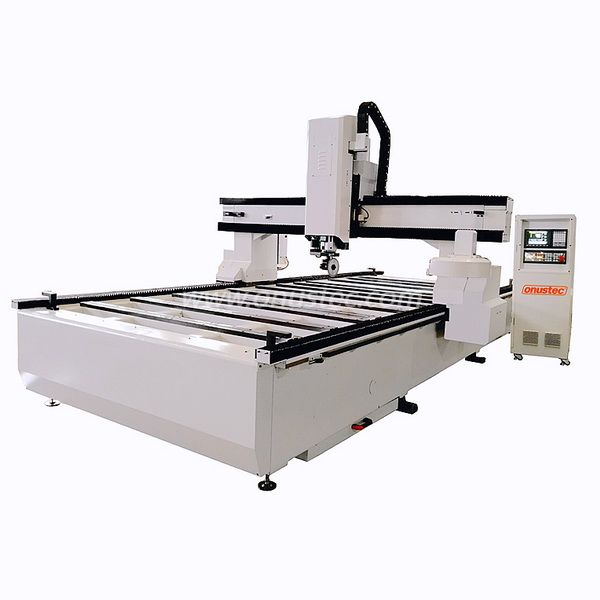
Frame construction serves as the backbone of any reliable routing system. We strongly advise assessing frame construction thoroughly before signing a purchase order. You want welded steel and cast-iron gantries. They provide the immense density needed for metalworking. Contrast this against bolted aluminum frames. Bolted frames lose structural integrity over time. The constant stress of routing aluminum slowly loosens the bolts, which ruins your calibration.
Next, evaluate the drive mechanics carefully. Look for precision ball screws on all axes for smaller footprint machines. For larger formats, high-end helical rack and pinion systems offer excellent performance and repeatability. Always choose these over standard belt drives. Belt drives stretch under heavy cutting loads. This stretching introduces backlash, entirely eliminating your ability to hold tight tolerances.
Spindle performance dictates your cutting efficiency. We outline minimum spindle requirements at a 3kW (4HP) minimum capacity for commercial production. Anything less lacks the brute force necessary to push through metal efficiently. Upgrading to a 5kW or larger spindle provides a safer buffer for continuous operation.
Explain the importance of constant torque across lower RPMs here. Wood routers excel at 24,000 RPM. However, aluminum routing requires maintaining aggressive chip loads without stalling. You will run the spindle between 10,000 and 18,000 RPM. If the spindle loses torque at these lower speeds, the bit rubs against the metal instead of slicing it. This friction creates extreme heat. Maintaining constant torque guarantees consistent chip evacuation.
Aluminum melts quickly under friction. Detail the necessity of Minimum Quantity Lubrication (MQL) or micro-drop mist systems. Without lubrication, hot chips weld themselves back onto the endmill. This phenomenon is known as chip re-welding. MQL systems prevent this by applying a highly atomized mist of cutting fluid directly to the cutting zone.
Discuss compressed air requirements as well. You need high-pressure air blasting continuously to clear the cut path. If the bit recuts old chips, tool breakage is almost guaranteed. A dedicated air line pointing directly at the tool path is mandatory.
Spindle Type | Torque at Low RPM (10k-15k) | Suitability for Aluminum Routing |
|---|---|---|
Standard Wood Spindle (High RPM) | Low | Poor - Prone to stalling and burning tools |
Constant Torque Electrospindle | High | Excellent - Maintains chip load efficiently |
Belt-Driven VMC Spindle | Very High | Overkill - Typically unavailable on large routers |
Choosing a 3-Axis CNC Router Machining Center for Aluminum is best for handling standard flat sheet work. It profiles, drills, and pockets flat aluminum plates efficiently. Industries like sign-making, facade cladding, and aerospace panel processing rely heavily on this straightforward architecture.
Your evaluation focus here should rest on table flatness. Even slight deviations in bed level cause inconsistent cutting depths. Vacuum hold-down reliability is equally vital. Non-porous materials require massive vacuum volume to prevent them from sliding during aggressive cuts. Finally, check the Z-axis clearance. Ensure the gantry sits high enough to clear your thickest fixtures.
If your production involves complex geometry, step up to a 4-Axis CNC Router Machining Center for Aluminium Sheet. This architecture adds a rotary axis or an articulating spindle head. It is best for continuous processing of aluminum extrusions and cylindrical parts. It excels at components requiring multi-sided machining without manual repositioning.
Your evaluation focus shifts slightly for this configuration. Rotary axis index precision becomes the top priority. A loose 4th axis ruins multi-sided alignment. Trunnion table rigidity matters immensely too. Any flex ruins the dimensional accuracy of complex parts. Confirm CAM software compatibility early in the buying process. Simultaneous 4-axis toolpaths demand sophisticated post-processors to run smoothly.
Address the elephant in the room: Why buy a large-format router instead of a Vertical Machining Center (VMC)? The answer comes down to geometry and scale. CNC Router Machining Centers win on their massive large-envelope work area. Machining 4x8 ft or 5x10 ft sheets on a VMC would be prohibitively expensive and physically restricted. Routers provide the massive table sizes required for sheet metal work while keeping capital investments reasonable.
Running a metal-cutting operation involves specific expenditures beyond the machine purchase. Budgeting for specialized tooling is your first major consideration. Standard wood bits will melt quickly. You must budget for specialized single-flute or O-flute carbide endmills. Tooling manufacturers design these specifically for aluminum routing. They evacuate chips much faster than standard multi-flute bits.
Facility requirements present substantial logistical challenges. Factoring in the cost of high-CFM industrial air compressors is an absolute must. These robust compressors drive your mist coolant systems and pneumatic automatic tool changers. Proper electrical phasing is just as important. Commercial routers demand stable, high-voltage three-phase power. Installing this infrastructure requires certified electricians and significant capital.
Operator safety and compliance demand strict attention. Acknowledging the risks of high-velocity metal chips is critical for shop floor management. Razor-sharp chips fly off the table at alarming speeds. You must budget for the necessity of safety enclosures. Light curtains provide automatic shutoffs if an operator enters the danger zone. Proper ventilation systems are also necessary to keep airborne coolant mist out of your workers' lungs.
Selecting the right machine requires a systematic approach. Follow these three actionable steps to finalize your buying decision and protect your investment.
Step 1: Request Real-World Test Cuts. Never buy based on spec sheets alone. Spec sheets often exaggerate capabilities in perfect conditions. Send the manufacturer a complex CAD file and specify your exact aluminum grade. Request a video of the cut in real-time to check for chatter. A smooth, quiet cut proves the machine possesses adequate mass and rigidity.
Step 2: Assess Control System Compatibility. Ensure the machine uses standard, non-proprietary G-code controllers. Look for Fanuc, Siemens, Syntec, or reliable PC-based systems like Mach4 and Centroid. Proprietary controllers cause massive headaches. They lock you into specific software ecosystems and complicate future repairs.
Step 3: Evaluate Support and Parts Availability. Downtime kills shop profitability. Check SLA response times before signing any purchase agreement. Scrutinize the warranty terms on spindle bearings, as these wear out fastest when cutting metal. Finally, confirm the domestic availability of replacement parts. Waiting months for a replacement sensor ruins production schedules.
Effectively cutting aluminum on a router requires prioritizing core mechanical features. You must prioritize machine mass, specialized spindles, and active lubrication. Do not get distracted by purely cosmetic features or overly large work envelopes. A rigid machine guarantees accurate parts, excellent surface finishes, and long tool life.
Your next steps involve concrete planning. Calculate your required production volume today. Finalize your maximum sheet size requirements. Once you establish these foundational metrics, begin requesting test-cut validation from top-tier machine builders. Seeing your actual parts machined perfectly will give you the confidence needed to make a final, informed decision.
A: Yes, but only for occasional, shallow passes at very slow speeds. For production work, a standard wood router will suffer from chatter and premature wear. It lacks the rigidity and specialized cooling systems necessary for high-volume metal processing.
A: Unlike wood, which often cuts at 18,000–24,000 RPM, aluminum typically requires 10,000–16,000 RPM coupled with the correct feed rate to maintain a proper chip load and avoid melting the material.
A: For most gantry-style CNC routers, a high-quality MQL (Minimum Quantity Lubrication) mist system is sufficient, cleaner, and avoids the rust and mess issues of retrofitting flood coolant onto a router bed.
A: Single-flute (O-flute) or specialized two-flute upcut endmills are optimal for routers to maximize chip clearance at high feed rates. Multi-flute bits tend to clog and break when used on aluminum.


