
Views: 0 Author: Site Editor Publish Time: 2026-08-22 Origin: Site


Evaluating equipment for non-ferrous metal fabrication presents a clear buyer dilemma. You do not want to overspend on massive, heavy machinery you rarely use to its full capacity. Conversely, under-specifying your equipment risks ruined parts and stalled production lines. What is the right balance? In industrial settings, "light duty" typically refers to gantry-style, high-RPM spindle machines. Engineers purpose-build them for sheet materials, extrusions, and composites. These setups provide distinct advantages for specialized workflows. This guide evaluates the technical, financial, and operational realities of adopting a light-duty system for aluminum processing. You will learn exactly how these machines operate and what limitations they have. We will also examine how they stack up against traditional milling equipment. Understanding these specific factors ensures you make an informed, highly strategic equipment choice.
Light-duty CNC machines maximize ROI for processing thin-to-medium aluminum sheets, composites, and extrusions where high RPM outweighs high torque.
A 3-axis configuration offers the optimal balance of working footprint and versatility for flat panel fabrication.
Success depends heavily on rigidity, proper tooling (e.g., single-flute cutters), and automated lubrication (MQL), not just raw machine power.
These systems are not replacements for Vertical Machining Centers (VMCs) when hogging out thick billet blocks; they serve distinct, complementary production needs.
Capital allocation requires precise strategic thinking. Many shop owners instinctively look at heavy vertical machining centers (VMCs) for metalwork. However, VMCs demand massive upfront investments. You pay a premium for cast-iron rigidity and low-speed torque. This massive torque goes entirely to waste if 90% of your work involves cutting 1/4" aluminum plate. It also goes unused when sizing lightweight aluminum extrusions. Misaligned equipment purchases tie up valuable capital. Instead, industrial facilities increasingly turn to CNC Router Machining Centers. These machines target specific applications to maximize upfront equipment budgets.
Footprint and facility requirements present another major consideration. VMCs occupy significant vertical and horizontal shop floor space. They also require heavy-duty reinforced concrete foundations. Furthermore, they demand robust three-phase power infrastructure. Light-duty routers offer far more flexible installation logistics. They spread their weight over a larger footprint. Many operate comfortably on standard commercial workshop floors. Some models even offer single-phase power options. This flexibility drastically reduces expensive facility upgrades.
Throughput metrics tell a surprising story regarding thin stock. You might assume heavier machines always cut faster. This assumption proves false for thin non-ferrous metals. High-speed feed rates on light-duty machines regularly outperform slower, heavier mills on sheet material. The secret lies in optimized chip loads. High RPM spindles allow faster feed rates without breaking small tools. Operators finish nested sheet profiling much faster. The machine moves nimbly across a large work area.
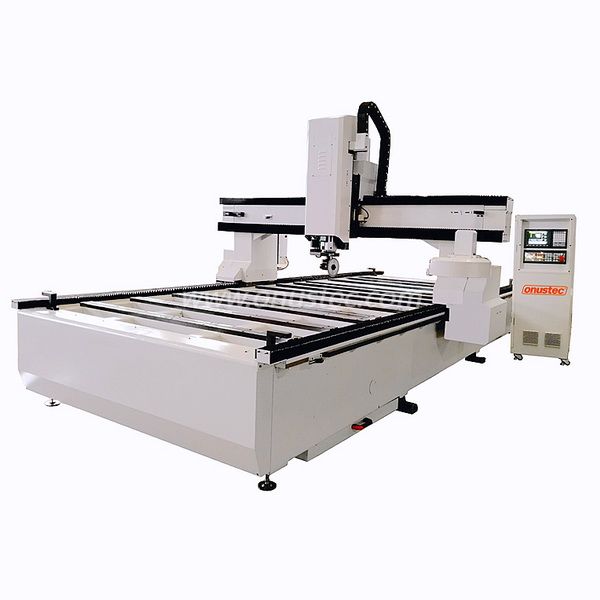
Spindle dynamics dictate success in non-ferrous material routing. A 3-Axis CNC Router Machining Center for Aluminum relies on high-RPM spindles. Standard operations require speeds between 18,000 and 24,000 RPM. This high velocity achieves the correct surface speed for smaller diameter tools. Small tools need incredible rotational speed to shear aluminum cleanly. If the spindle turns too slowly, the cutter grabs the material. High RPM prevents the tool from snapping.
The working envelope provides the most obvious functional advantage. These machines boast large bed sizes. Popular formats include 4x8 or 5x10 foot tables. These massive beds allow operators to nest full sheets of aluminum easily. Nesting minimizes raw material waste. It also drastically reduces manual material handling. Operators load one full sheet, run the program, and offload finished parts. This efficiency saves countless labor hours.
Axis travel and precision have evolved significantly in modern systems. High-end light-duty routers no longer use basic hobby components. They utilize advanced closed-loop stepper motors or AC servo motors. These drive systems maintain incredibly tight tolerances across large travel distances. They continuously monitor their own position. If a tool encounters unexpected resistance, the closed-loop system instantly corrects the position. You get pinpoint accuracy without needing the massive cast-iron base of a heavy-duty mill.
Rigidity and vibration dampening remain critical, even in "light duty" categories. Frame weight absolutely still matters. A machine must absorb the resonant frequencies generated during aluminum milling. Welded steel frames provide vastly superior dampening compared to bolted aluminum extrusions. Bolted frames often vibrate under lateral cutting forces. This vibration causes chatter marks on the cut edge. Severe chatter leads directly to premature tool breakage. Always inspect the structural integrity of the gantry and base.
Cooling and chip evacuation represent life-or-death factors for your end mills. You cannot successfully dry-cut aluminum on a router. Aluminum becomes soft and sticky when heated by friction. Dry-cutting leads to galling. The aluminum literally melts and welds itself to the cutting tool. You must use a Minimum Quantity Lubrication (MQL) or mist system. MQL delivers a precise mix of compressed air and tiny droplets of lubricant. It cools the cut while violently blowing chips out of the channel. Flood coolant is messy and usually unnecessary for these large-bed machines.
Workholding solutions dictate your final part quality. Securing thin stock presents unique challenges. Material as thin as 0.24mm will bow upward if improperly secured. We must lock the material down flat.
Workholding Comparison for Aluminum Sheets
Workholding Method | Best Application | Limitations |
|---|---|---|
Vacuum Tables (Zoned) | Full sheets, thin materials down to 0.24mm. | Requires strong vacuum pump; struggles with tiny, loose parts. |
Mechanical Clamping | Thick extrusions, heavy flat bar stock. | Causes bowing in thin sheets; limits toolpath access at edges. |
Tape and Cyanoacrylate (CA) | Small, intricate parts prone to shifting. | Labor intensive; not scalable for high-volume production. |
Setting realistic expectations around Material Removal Rates (MRR) prevents early frustration. Light-duty machines lack the brute force for deep, heavy cuts. You cannot plunge a half-inch end mill deep into a block of aluminum and plow through it. Instead, operators must utilize multiple shallow passes. We call these peel milling or trochoidal strategies. Trochoidal toolpaths take light, rapid, circular bites out of the material. This strategy keeps tool engagement low. It leverages the high spindle RPM to clear material efficiently without overloading the gantry.
The operator learning curve differs from wood or plastic routing. Aluminum demands strict reliance on accurate feeds and speeds. Wood is forgiving. Plastics might melt a little. Aluminum, however, is merciless. A mere 10% deviation in feed rate can cause immediate tool failure. Operators must understand chip load calculations. They must listen to the machine. A high-pitched squeal indicates poor parameters. Proper training remains absolutely non-negotiable for consistent success.
Maintenance overhead requires daily attention. Aluminum chips behave differently than sawdust. They are sharp, jagged, and abrasive. Managing these chips in gantry tracks requires diligence.
Track Cleaning: Operators must sweep or blow out linear rails daily to prevent abrasive wear.
Lubrication Checks: Daily inspection of automatic oilers ensures bearings do not seize.
MQL Fluid Levels: Running the mist system dry for even five minutes will destroy tooling.
Spoilboard Resurfacing: Regular fly-cutting of the MDF or phenolic spoilboard ensures vacuum pressure remains optimal.
Buyers frequently compare different technologies before finalizing a purchase. If you find yourself asking why choose light duty cnc aluminum cutting machine setups over VMCs or plasma tables, the answer lies in application match. VMCs absolutely win on heavy material removal. They also hold the tightest possible tolerances for aerospace parts. However, they lose terribly on upfront cost. They also lack the sheet capacity required for large panel work. Furthermore, their lower spindle speeds struggle with tiny engraving bits.
We must also look at CNC plasma cutters. Plasma tables cut incredibly fast for rough shapes. They handle thick steel easily. However, plasma cutting relies on extreme heat. This introduces a Heat Affected Zone (HAZ) along the cut edge. The HAZ hardens the aluminum, making secondary edge finishing difficult. Furthermore, plasma cutters cannot mill pockets. They cannot accurately countersink holes or engrave part numbers. They serve purely as profile-cutting tools.
The light-duty CNC router represents the perfect sweet spot. It bridges the gap between these two extremes. It provides perfectly clean, mill-quality edges. It executes precise hole-making and complex pocketing. It handles massive 4x8 sheets effortlessly. Best of all, it achieves these results at a mere fraction of a VMC's capital cost.
Benchmarking performance provides the safest purchasing data. Never buy a machine based purely on a brochure. Mandate test cuts using your specific materials. An alloy like 6061-T6 cuts crisply and cleanly. Conversely, marine-grade 5052 aluminum is gummy and prone to welding. You must see how the machine handles your exact material thickness and alloy grade. Request a video of the test cut. Better yet, attend the test cut in person.
Controller architecture dictates daily reliability. Evaluate the control system carefully. Avoid PC-based, hobby-grade software for commercial production environments. Windows updates can interrupt production runs. Industrial controllers offer superior stability. They interpret G-code faster and more accurately. Ensure the controller boasts full compatibility with standard, industry-leading CAM software. Your programmers need seamless integration between the design office and the shop floor.
Vendor support and post-sale training seal the deal. Machines inevitably break. Replacement parts must be readily available within your region. Assess the warranty terms closely. Furthermore, look for accessible application engineering support. A good vendor provides baseline tooling recipes. They help your operators dial in feeds, speeds, and MQL settings during the first crucial weeks of operation. Strong vendor partnerships drastically shorten the ROI timeline.
Choosing a light-duty machine represents a strategic calculation, not a compromise. It specifically targets flat sheet materials, extrusions, and composites. You maximize your investment by avoiding unnecessary heavy-cast equipment. To ensure a successful implementation, keep these critical action steps in mind:
Match the Machine Envelope: Align the bed size precisely with your most common raw material dimensions to reduce manual handling.
Prioritize Rigid Spindles: Ensure the spindle provides 18,000 to 24,000 RPM to optimize chip loads on non-ferrous metals.
Invest in Mist Cooling: Never attempt dry-cutting. Specify a reliable MQL system immediately upon purchase.
Demand a Test Cut: Send your specific aluminum alloy to the manufacturer to verify edge quality and real-world cut times.
Take the next step in optimizing your production floor. Consult an application engineer today. Request a material-specific test cut to evaluate the true financial impact of adding a specialized routing center to your workflow.
A: Yes, it can cut thin aluminum precisely if secured properly. You must use a zoned vacuum table or specialized double-sided machining tape. Standard mechanical clamps will cause the thin sheet to bow upward, resulting in torn edges and broken end mills.
A: You must use single-flute, O-flute solid carbide bits. These specific geometries provide maximum chip clearance. They prevent the gummy aluminum from packing into the flutes, which prevents the tool from overheating and snapping at high RPMs.
A: While not strictly necessary, an ATC drastically improves throughput. If your jobs require multi-step processes—such as center-drilling holes, pocketing, and then profile cutting—an ATC eliminates the downtime and human error associated with manual collet changes.
A: We strongly advise against it. Dry-cutting aluminum generates immense friction. The metal will melt, gall, and weld permanently to your end mill. At bare minimum, you need a high-pressure air blast, but a true mist coolant system (MQL) guarantees tool life and edge quality.


