
Views: 0 Author: Site Editor Publish Time: 2026-06-24 Origin: Site


The fabrication landscape is undergoing a fundamental shift. Gone are the days when manual single-head cutting could sustain a competitive fenestration or industrial profile business. As we move further into 2026, the industry faces dual pressures: volatile raw material costs for aluminum and PVC, and a persistent, widening shortage of skilled labor. To survive and thrive in this environment, facility managers are pivoting toward high-precision automation.
This is where the 3-Axis CNC Double Mitre Saw becomes a critical asset rather than a luxury. Unlike hobbyist tools found in home workshops, these industrial-grade machines offer servo-driven precision capable of handling complex compound angles at high speeds. They bridge the gap between mass production volume and custom geometric accuracy. This article explores how adopting this technology solves production bottlenecks and why it is becoming a standard requirement for modern fabrication floors.
Efficiency: 3-Axis interpolation reduces cycle times by 30-50% compared to pneumatic or manual setting saws.
Versatility: Essential for complex geometries in curtain walls and non-standard architectural designs.
Precision: Servo-driven movements eliminate human error in length and angle setting (tolerance ≤ 0.1mm).
Integration: Modern units must integrate with ERP/production software to justify the CapEx.
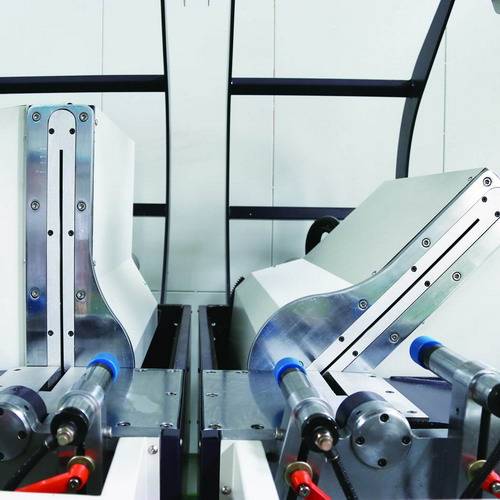
The demand for complex architectural designs and high-throughput manufacturing has pushed standard cutting equipment to its limit. In 2026, we see three primary sectors where 3-axis CNC technology is not just helpful, but mandatory for maintaining profitability.
Modern skylines are defined by non-linear designs. Architects are increasingly specifying twisted facades, faceted curtain walls, and irregular geometric shapes that require heavy-duty aluminum profiles. These structures demand compound angles where profiles must be mitered and beveled simultaneously.
Manual saws struggle here. An operator using a traditional machine must manually adjust the head angle, perform a test cut, measure with a protractor, and readjust. This process is slow and prone to cumulative errors. In contrast, Multi Angle 3-Axis CNC Double Mitre Saws allow for dynamic angle adjustments—typically ranging from 22.5° inward to 135° outward—without any manual recalibration. The CNC controller manages the tilt of both heads independently while positioning the length. For a facade manufacturer, this means they can transition from cutting a 45° corner to a complex 67.4° structural node instantly, ensuring that even the most ambitious custom geometric designs fit together perfectly on the job site.
While facade work demands geometric flexibility, the window and door sector demands speed. Whether fabricating PVC frames for residential housing or thermal-break aluminum systems for commercial offices, the primary metric is throughput per shift.
The efficiency gain of a double mitre saw over a single-head saw is geometric. By cutting both ends of a profile simultaneously, fabricators halve the handling time. However, the 3-axis CNC integration adds another layer of speed. It automates the dimension setting. The operator scans a barcode or selects a batch file, and the machine’s mobile head moves to the exact X-axis position immediately. This is critical for "batch size one" production, where every window frame in a house order might have slightly different dimensions. High-speed servo motors ensure the machine is ready to cut before the operator has even finished loading the profile.
Beyond architecture, there is a booming market for industrial aluminum framing used in solar panel mounting systems, modular conveyor belts, and automotive chassis components. These applications require high repeatability and burr-free finishing.
Structural integrity often relies on the precise mating of surfaces. If a cut is off by 0.5mm, a solar array might not align, or a conveyor system might vibrate excessively. Industrial users adopt 3-axis technology to lock in tolerances. Once a program is verified, the saw repeats the exact movement for thousands of cycles, eliminating the "Friday afternoon fatigue" factor that affects human operators. The result is a consistent, structural-grade finish that meets stringent automotive and industrial standards.
When evaluating industrial saws, buyers often encounter a price spectrum that can be confusing. The primary differentiator lies in the drive system: pneumatic, hybrid, or full servo. Understanding this hierarchy is essential for selecting the right machine for your facility.
We can categorize double mitre saws into three distinct tiers based on their control mechanisms:
| System Level | Angle Control | Length Positioning | Best Use Case |
|---|---|---|---|
| Entry-Level (Pneumatic) | Fixed mechanical stops (usually 90°, 45°). | Manual or simple digital readout. | Standard rectangular frames; low mix, high volume of identical sizes. |
| Mid-Range (Hybrid) | Pneumatic tilt (fixed angles) or manual handwheel. | Electronic positioning (1 Axis). | General fabrication where length varies but angles remain standard (mostly 45°/90°). |
| High End (3-Axis CNC) | Full servo motor control (Y/Z axes). | Full servo motor control (X axis). | Complex curtain walls, custom architectural joinery, fully automated production. |
A High End 3-Axis CNC Double Mitre Saw distinguishes itself by offering full servo control over the length (the X-axis) and the independent tilting of both cutting heads (the Y and Z axes). This removes the reliance on mechanical hard stops.
The shift to servo technology is driven by the need for agility. In older pneumatic systems, changing an angle meant physically moving a pin or adjusting a bolt. Servo systems change this paradigm entirely.
Infinite Angles: Fabricators are no longer limited to fixed detents like 45 degrees. A servo-driven head can position itself at any degree, such as 67.4° or 22.1°, programmatically. This capability is vital for modern architecture that avoids right angles.
Changeover Speed: In a high-mix environment, setup time is the enemy of productivity. With a Servo Driven 3-Axis CNC Double Mitre Saw, there is zero setup time between batches. The machine auto-adjusts in seconds while the operator prepares the next bar. This fluidity allows factories to run "Just-in-Time" production schedules without efficient loss.
Maintenance and Reliability: Pneumatic systems rely on air cylinders and shock absorbers that wear out, leak, and react to humidity changes in the compressed air lines. Servo motors are electrical and closed-loop. They provide feedback on their position and require significantly less mechanical maintenance, offering higher long-term reliability and consistency.
Selecting the right machine involves more than just checking the "3-axis" box. You must evaluate the physical capacity and the digital intelligence of the unit.
The physical constraints of your profiles dictate your machine choice. For standard window profiles, a 500mm blade is often sufficient. However, the curtain wall industry is trending toward deeper, wider mullions and transoms to support larger glass panes. This often necessitates 600mm blades. These larger blades require higher torque motors to maintain RPM during the cut, preventing the blade from stalling or wandering in thick aluminum.
Blade feed direction is another critical mechanical detail. We generally compare "Upstroke" systems against "Back Stroke" or "Frontal" systems. Upstroke saws (where the blade rises from under the table) are common in simpler machines. However, for high-precision, heavy-duty cutting, "Back Stroke" (where the blade moves horizontally from back to front) often provides better clamping rigidity and safety. It pushes the profile against the fence rather than lifting it off the table.
In 2026, a saw that cannot talk to your office is a liability. Multi Function 3-Axis CNC Double Mitre Saws are defined by their software logic.
Data Integration: To prevent operator input errors—which account for a significant portion of scrap—the saw must be able to read .CSV or .XML cut lists directly from design software like Klaes, Orgadata, or AutoCAD. This creates a seamless digital thread from the architect's desk to the factory floor.
Optimization Modes: Advanced control software includes dynamic cutting strategies. "Oversize Cutting" allows the machine to process pieces longer than its physical bed by cutting one end, repositioning the profile automatically using the mobile head as a pusher, and then cutting the second end. Conversely, "Nested Cutting" logic can optimize a single bar of raw material to cut multiple different parts, reducing scrap waste significantly.
Industrial environments have strict safety mandates. When dealing with large diameter blades spinning at high RPMs, safety features are non-negotiable.
Operator Safety: Modern standards require mandatory two-hand operation buttons. The operator must have both hands occupied on the control panel to trigger the cut, ensuring they cannot be near the blade. Additionally, fully enclosed dynamic protection guards—which only open when the blade is stationary—are essential for preventing injury.
Dust & Chip Management: In a CNC environment, aluminum chips are not just messy; they are dangerous to the equipment. Chips can interfere with sensors and ball screws. Integrated motorized conveyors and strategic extraction points are critical for maintaining the accuracy of the servo systems over time.
Investing in a 3-axis CNC system is a significant capital expenditure (CapEx). Facility managers must justify this cost through clear ROI calculations focused on throughput and material efficiency.
The most direct metric is "cuts per shift." A single 3-axis machine typically replaces 2 to 3 manual cutting stations. By consolidating production into one automated cell, you reduce the headcount required for cutting, allowing you to redeploy skilled workers to assembly or quality control tasks where human judgment is more valuable.
With aluminum prices projected to remain high in 2026, material yield is a major financial lever. Manual cutting often leads to "safe" cuts that are slightly too long, or errors that result in total scrap. Software-driven optimization on a CNC saw reduces off-cut waste by 15-20%. Over a year of production, these material savings alone can often cover the lease payments on the machine.
The machine is only as good as the support behind it. When evaluating a 3-Axis CNC Double Mitre Saw Manufacturer, look beyond the brochure specs.
Support Ecosystem: Evaluate the availability of critical spare parts like servo motors and PLC boards. Does the manufacturer offer remote diagnostic capabilities via the machine's ethernet connection? This can reduce downtime from days to minutes.
Installation Footprint: These are substantial machines, often measuring 4 to 6 meters in length. You must verify floor space availability and ensure your facility has the requisite 380V/3-phase power supply to handle the load of dual motors and extraction systems.
The 3-Axis CNC Double Mitre Saw is no longer a niche tool reserved for specialized facade manufacturers. As we navigate the manufacturing challenges of 2026, it is becoming the standard for any fabricator facing labor shortages and high quality demands. The ability to automate complex geometry, reduce material waste, and integrate seamlessly with production data makes it a cornerstone of the modern smart factory.
Our final advice for decision-makers is to prioritize control system openness and servo-driven flexibility over raw horsepower alone. A powerful saw that cannot integrate with your software is a bottleneck waiting to happen. To move forward, audit your current production bottlenecks—if your setup time exceeds your cutting time, a 3-Axis upgrade is not just validated; it is overdue.
A: A 3-Axis saw controls the length (X) and the tilt angles of both heads (Y/Z). A 5-Axis machine adds blade rotation or notch cutting capabilities, often allowing the blade to perform complex compound cuts or end-milling operations. 5-Axis units are often called "Edgemasters" and are used for highly complex joinery, whereas 3-Axis covers most standard and architectural cutting needs.
A: Yes, many machines are versatile. A Multi Function 3-Axis CNC Double Mitre Saw can handle both materials. However, you must adjust the blade RPM and select the correct blade tooth geometry (TPI). Aluminum requires different cutting speeds and lubrication (mist spray) compared to PVC to prevent melting or burring.
A: Most industrial saws come with proprietary onboard control software (often running on industrial PCs like Magelis or Siemens). However, for maximum efficiency, they should not operate in a silo. They should link to your office-based window and door production software (like Klaes or Orgadata) via Ethernet/LAN to import cut lists directly.
A: Oversize cutting is a software-driven sequence. If you need to cut a 7-meter profile on a 5-meter bed, the machine cuts the first end, then the mobile head clamps the profile and automatically repositions it (feeding it forward). The machine then calculates the remaining distance and cuts the second end. This allows for processing profiles longer than the physical rail.


