
Views: 320 Author: Onustec Group Publish Time: 2026-03-18 Origin: Site


In modern manufacturing, the bottleneck often isn't the final 5-axis milling center—it’s the initial material preparation. If raw stock isn't cut cleanly and accurately, every downstream process suffers. You waste time, material, and valuable machining hours correcting poor cuts.
While manual and semi-automatic saws rely heavily on operator judgment, a true CNC Automatic Saw shifts the burden of precision from the operator to software and servo motors. This digital transformation guarantees repeatability. It eliminates human error from the equation.
For plant managers and procurement teams evaluating equipment upgrades, understanding how these machines operate, their hidden costs, and their impact on Total Cost of Ownership (TCO) is critical before requesting vendor quotes. You must look beyond the sticker price. Evaluate how automated sawing integrates into your broader production ecosystem. Doing so ensures you choose the right technology to scale your operations efficiently.
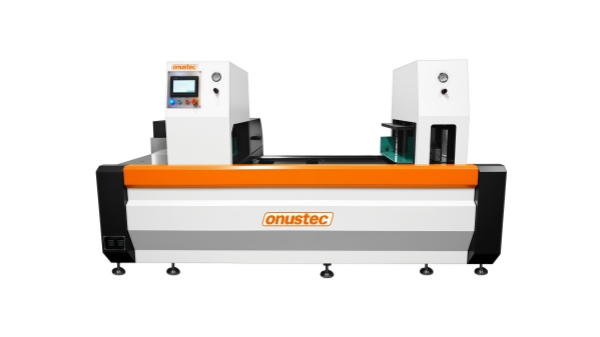
Fundamental Shift: A CNC automatic saw replaces manual material feeding and measuring with programmable, servo-driven axes (X, Y, Z), ensuring exact repeatability.
ROI Driver: High-precision primary cutting reduces material scrap, compensates automatically for blade kerf, and significantly lowers tool wear on downstream machining centers.
Scalability: True CNC systems allow for multi-program queuing and complex angle adjustments, paving the way for low-intervention or "lights-out" production runs.
Hidden Costs: Budgeting must account for more than the machine's sticker price, factoring in CAD/CAM software licensing, advanced alloy blades, and chip/dust extraction infrastructure.
Understanding the inner workings of automated sawing equipment helps you maximize its potential. The technology relies on a seamless blend of mechanical hardware and digital instructions.
At its core, a CNC saw operates like an industrial graphing plotter. Instead of a pen, it uses a high-speed blade. You provide coordinates. The X-axis controls the feed length. The Y-axis and Z-axis manage the angle and depth. The machine connects these points using exact feed rates. It removes the guesswork from complex cutting paths.
Modern manufacturing requires a digital thread. The workflow from design to finished cut follows a strict sequence:
Design & CAM: Engineers create the part in Computer-Aided Design (CAD) software. Next, Computer-Aided Manufacturing (CAM) software translates this 3D model into specific toolpaths.
G-Code Generation: The software converts these paths into G-code. This is the machine's native language. It dictates feed speeds, spindle activation, and exact coordinates. For example, standard industry codes might use G00 for rapid positioning and G01 for linear cutting feed.
Digital instructions mean nothing without robust hardware. Industrial machines utilize closed-loop servo motors equipped with encoders. These encoders provide real-time positional feedback to the controller. This closed-loop system is vastly superior to open-loop stepper motors. It corrects tiny positional errors instantly during operation.
Automatic Kerf Loss Compensation is another game-changer. Every cut turns a small fraction of material into dust. We call this the kerf. The software automatically calculates and offsets the width of the blade. It adds this kerf value to the feed length automatically. The final cut piece meets exact dimensions. Operators never have to perform manual math.
Choosing the wrong level of automation leads to either idle capital or operator bottlenecks. You must frame this as a critical business problem. Over-investing traps cash. Under-investing limits your production ceiling.
| Machine Type | Primary Mechanics | Best Suited For | Operator Dependency |
|---|---|---|---|
| Semi-Automatic | Hydraulic/pneumatic clamping. Manual material feeding. | Irregular shapes, extra-large billets, low-volume runs. | High. Needs constant manual intervention. |
| NC (Numerical Control) | Touchscreen input. Auto-feeds material. Single-axis cuts. | Medium-to-high volume production of identical lengths. | Medium. Requires initial batch setup. |
| Full CNC | Full programmatic control. Multi-axis execution. | Tight tolerances, complex batching, digital traceability. | Low. Supports "lights-out" operation. |
These machines bridge the gap between manual labor and basic automation. They utilize hydraulic or pneumatic systems for clamping and blade descent. However, they still require manual material feeding. They are best for highly irregular shapes or extra-large billets exceeding 800mm. Low-volume flexible repair shops benefit most from this setup.
NC saws introduce programmable consistency. They feature touchscreen-based length and quantity inputs. The machine auto-feeds the material based on these parameters. They are excellent for medium-to-high volume production of identical lengths. If your shop strictly performs simple, repetitive single-axis cuts, an NC machine offers great value.
This is the top tier of automated cutting. They offer full programmatic control. These machines execute multiple different cut lengths, angles, and batches sequentially. They do this without operator intervention. They are best for tight tolerance requirements, often operating in 0.1mm increments. Environments requiring strict digital process traceability rely on full CNC systems.
Not all automated saws share the same build. The physical configuration must match your primary material type. Buying the wrong frame type causes excessive vibration and rapid blade dulling.
Tough alloys require massive structural rigidity. A Heavy Duty CNC Automatic Saw is built with ultra-rigid cast iron. Some use heavy-gauge steel frames. These heavy frames absorb harmful vibrations during high-torque cutting. If you cut titanium, Inconel, or tool steel, this mass is critical. It minimizes blade deflection during prolonged cutting cycles. Blade drift ruins expensive aerospace or medical grade alloys.

Size dictates material handling requirements. A Large CNC Automatic Saw targets structural steel and oversized pipes. It also handles large industrial panels. These machines feature heavy-duty roller conveyors. They integrate seamlessly with automated material handling systems. Pushing a massive steel I-beam requires specialized infeed and outfeed infrastructure.
Complex structural joints demand angular flexibility. A Multi Angle CNC Automatic Saw or a 3-Axis CNC Automatic Saw solves this problem beautifully. They are equipped with swiveling saw heads. Some use rotating material vises controlled by the CNC program. This eliminates the need for an operator to manually unlock, measure, and rotate the machine head for miter cuts. They are ideal for architectural framing and intricate aluminum extrusions.
Navigating vendor catalogs can be overwhelming. You must evaluate machines based on technical capabilities rather than marketing claims. Focus on feed systems, software, safety, and downstream value.
Look closely at how the machine moves raw stock. Ensure the automated feed system matches your material profile. Roller feeds work well for long, structural shapes. Shuttle vises provide superior grip for slick or heavy round bar stock. The feed system must overcome the specific friction and weight profile of your daily materials.
Standalone machines isolate your production data. Evaluate if the machine supports Direct Numerical Control (DNC). Check if it integrates smoothly with your facility's ERP or MES systems. Networked machines allow centralized program distribution. This tracks production metrics in real-time, preventing bottlenecks before they happen.
Industrial safety is non-negotiable. Look for fully enclosed cutting envelopes. Sensor-based material detection prevents the blade from advancing into empty space. Automated blade-tension monitoring stops the machine if a blade snaps. These features reduce operator accident rates. They also lower your facility liability under strict safety standards.
Best Practice: Always interlock enclosure doors to halt spindle rotation immediately if opened during a cycle.
Think of the saw as the first step in milling. Assess how the saw's precision impacts secondary operations. A cleaner, more accurate initial cut means less facing work later. You spend less time and execute fewer tool changes on your expensive 5-axis CNC milling centers. The saw pays for itself by freeing up your most expensive machines.
Capital expenditure proposals often fail by ignoring the total picture. The sticker price for the machine is just the baseline. You must budget for several hidden variables to calculate a realistic return on investment.
Software requires ongoing investment. Buyers must budget for CAD/CAM software seats. You often need custom post-processors required to generate the specific G-code for the saw. Annual software maintenance fees also impact your yearly operating budget.
Industrial machines demand robust facility support. Heavy-duty equipment requires stable 3-phase power. You need high-capacity compressed air lines for pneumatic clamping. Robust chip conveyors and dedicated coolant filtration systems are mandatory. Without these, the machine will choke on its own waste material.
High-speed cutting burns through cheap tooling. Budget for premium consumables:
Bi-metal blades: Good for general-purpose mild steel cutting.
Carbide-tipped alloy blades: Essential for maintaining tight cutting paths on tough aerospace alloys.
Synthetic cutting fluids: Required for optimal heat dissipation and chip evacuation.
Cheap blades cause premature dulling and increase blade drift. Invest in quality tooling to protect your machine investment.
Mechanical neglect destroys ROI. Industry data suggests nearly 30% of machine failures stem from poor maintenance. You realize true ROI only by enforcing strict maintenance protocols. Clear guide debris daily. Monitor hydraulic fluid health monthly. Ensure proper blade tensioning before every major shift. Preventative maintenance is always cheaper than emergency downtime.
Upgrading to a CNC automatic saw transforms material preparation. It changes an unpredictable manual chore into a quantifiable, highly precise, and data-driven process. The right machine eliminates operator guesswork, minimizes expensive material scrap, and accelerates downstream machining.
Before requesting vendor proposals, take action internally. Conduct a strict audit of your current material scrap rates. Track the operator hours spent on manual setups. Calculate the secondary machining time required to fix poor initial cuts. Use these concrete metrics as your baseline for ROI calculations. Armed with this data, you can confidently select a machine tailored to your exact production scale.
A: An NC (Numerical Control) saw allows operators to input basic parameters like length and quantity via a touchscreen for repetitive cuts. A CNC saw uses advanced software and servo motors to run complex, multi-step programs involving varying lengths, speeds, and angles automatically.
A: When a saw blade cuts, it turns a small amount of material into dust, known as the kerf. The CNC software automatically adds the exact thickness of the blade to the feed length. This ensures the final usable piece matches the CAD dimensions perfectly without manual math.
A: Not necessarily. While complex multi-axis systems integrated into larger CAD/CAM workflows benefit from skilled programmers, many modern machines feature conversational programming at the interface. This allows standard operators to set up basic batch jobs easily using visual prompts.
A: Aside from programmed feed rates being too fast for the material, mechanical neglect is the primary culprit. Worn blade guides, improper blade tensioning, and debris buildup cause blade drift. This mechanical drift overrides the machine's programmatic accuracy completely.


