
Views: 238 Author: Onustec Group Publish Time: 2026-01-21 Origin: Site


CNC (Computer Numerical Control)machines have transformed modern manufacturing, offering unmatched precision and speed. They have replaced manual processes, performing complex tasks with ease.
In this article, Onustec will explore the different types of CNC machines. You will learn about their unique applications and the benefits they provide to industries aiming to optimize production and enhance product quality.
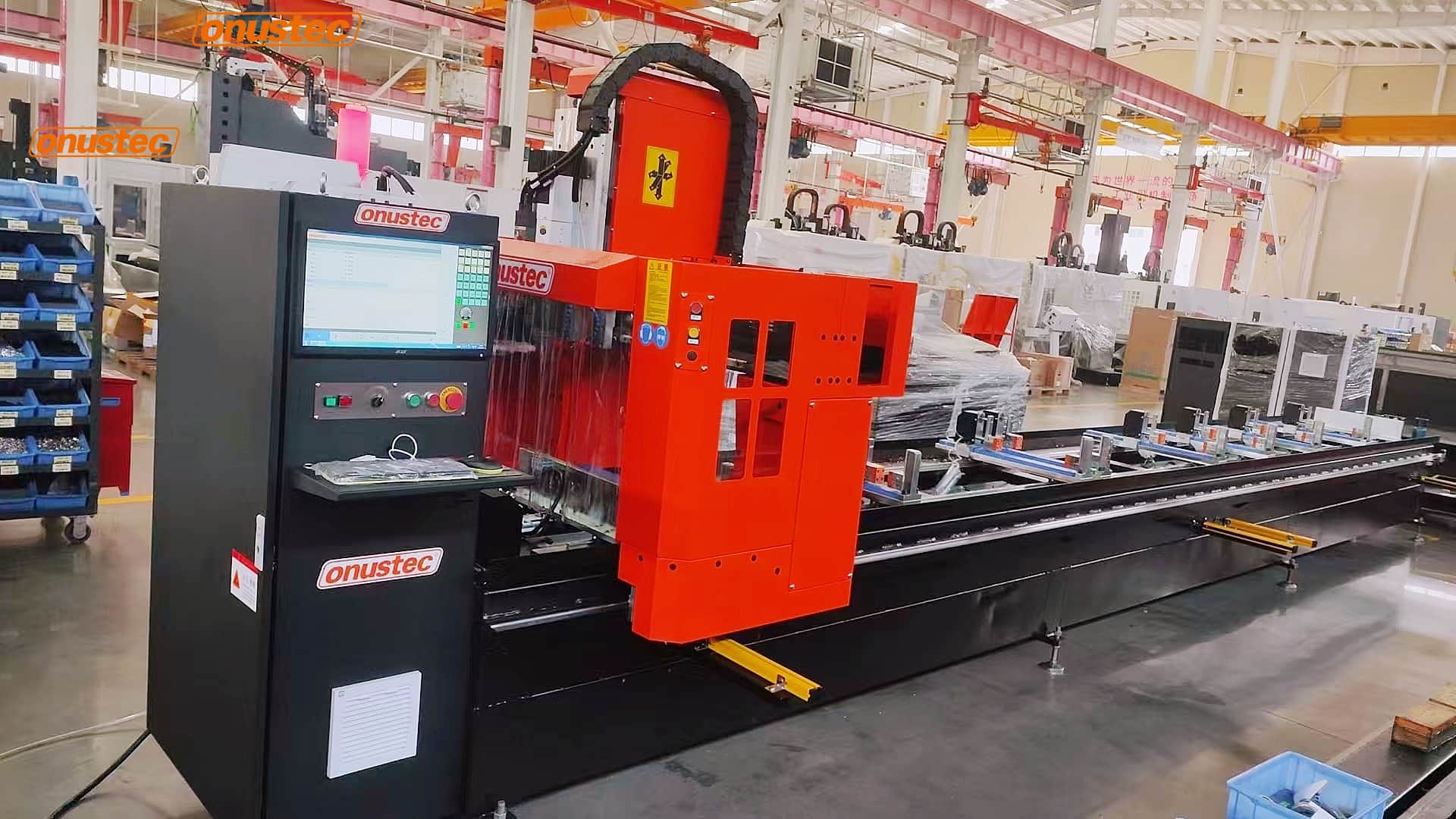
The following table provides a detailed comparison of different types of CNC milling machines, including vertical, horizontal, and universal models, highlighting key differences, applications, technical specifications, and considerations.
| Type | Description | Applications | Technical Specifications | Considerations |
|---|---|---|---|---|
| Vertical Milling | Equipped with a vertically rotating spindle, ideal for flat surface cutting and drilling. The vertical movement of the spindle provides precise surface machining and hole drilling. | Used for surface cutting, slot milling, drilling, etc., commonly used in metal part processing, especially for flat parts. | Spindle diameter: typically 50mm; Table size: 500mm x 250mm; Machining accuracy: ±0.01mm. | The cutting depth and surface quality are affected by the stability of the spindle, more suitable for low to medium hardness materials. |
| Horizontal Milling | The spindle rotates horizontally, making it suitable for deeper cuts and more complex tasks. Horizontal mills can handle thicker workpieces than vertical mills. | Used for deep cutting and large-area milling, especially suitable for cutting thicker materials and large parts. | Spindle speed: typically 500-5000RPM; Table size: 750mm x 400mm; Maximum cutting depth: 10mm. | Best for cutting complex shapes and thick materials, but requires strong fixtures and support to maintain machining accuracy. |
| Universal Milling | Combines the functions of both vertical and horizontal mills, offering great flexibility for various machining tasks. The work table can be adjusted to perform cutting at multiple angles. | Ideal for diverse machining tasks, especially for complex parts and multi-side machining. Commonly used in aerospace, mold making, and precision machining. | Spindle speed range: 1000-4000RPM; Table size: 1000mm x 500mm; Machining accuracy: ±0.02mm; Max cutting depth: 12mm. | Suitable for versatile tasks but has a higher operational complexity. Best for experienced operators. Adjust parameters when working with different materials. |
Tip: When selecting a milling machine, consider the complexity of the part and the hardness of the material. For high-precision and complex parts, a universal milling machine's versatility provides better adaptability.
CNC milling machines are used extensively in industries like aerospace, automotive, and manufacturing for producing complex parts such as engine blocks, turbine blades, and machine components. They can handle materials like metals, plastics, and composites with high precision. In aerospace, CNC mills are used for parts that require tight tolerances, while in automotive, they manufacture engine components and prototypes.
CNC milling offers significant advantages beyond precision and repeatability. The ability to automate complex tasks, such as contouring and drilling, leads to higher efficiency and reduced operator fatigue. Additionally, CNC mills can maintain consistent quality over extended production runs, crucial for industries requiring tight tolerances like aerospace and medical device manufacturing. The integration of advanced software allows for real-time monitoring and adjustments, optimizing cutting paths, reducing tool wear, and improving overall material usage, thus enhancing the sustainability of the process.

CNC lathes are used for shaping cylindrical parts. The workpiece is rotated, and a cutting tool is applied to remove material. This process allows for precise control over the size and shape of the part. CNC lathes come in different types, such as turret lathes and engine lathes, each designed to meet specific manufacturing needs. The CNC lathe operates with computer control, ensuring that the cutting process is performed exactly as required, without manual intervention.
CNC lathes are ideal for producing parts with rotational symmetry, such as shafts, bolts, and gears. These machines are used across a wide range of industries, including automotive for making engine components, aerospace for creating landing gear and turbine parts, and medical for manufacturing precision instruments.
| Industry | Applications | Technical Specifications | Considerations |
|---|---|---|---|
| Automotive | Used for manufacturing engine components, bearings, pistons, and other parts with rotational symmetry. CNC lathes can precisely process various rotating parts. | Spindle speed: 500-2000RPM; Machining accuracy: ±0.02mm; Max machining diameter: 500mm. | For large-scale production, CNC lathes' high efficiency significantly increases production speed. However, choose the right tools and cutting parameters to reduce tool wear. |
| Aerospace | Used for manufacturing complex aerospace components such as landing gears and turbine parts, requiring extremely high precision and strength. | Spindle speed: 1000-5000RPM; Materials: titanium alloys, aluminum alloys, steel; Precision: ±0.005mm. | For aerospace part manufacturing, ensure the lathe can handle specialized materials like titanium alloys while maintaining high surface finish. |
| Medical | Used to manufacture precision medical instruments, such as surgical tools, implants, and prosthetics. CNC lathes meet the medical industry's requirements for precision and consistency. | Max travel: 500mm x 200mm; Machining accuracy: ±0.01mm; Suitable materials: stainless steel, titanium alloys. | When manufacturing medical instruments, consider sterility and biocompatibility while controlling tolerances to ensure safety and functionality. |
| General Manufacturing | Used for mass production of standardized parts like bolts, nuts, gears, and more. CNC lathes can efficiently produce large quantities of repetitive parts. | Max travel: 1000mm; Material range: steel, aluminum, plastic; Spindle speed: Over 2000RPM. | For mass production, ensure machine stability and prevent production delays due to equipment failure. |
Tip: When selecting a CNC lathe, ensure it meets the required size range and accuracy for your production needs. For high-precision applications like medical or aerospace, choosing equipment with multi-axis capabilities and higher precision is crucial.
CNC lathes not only improve speed and precision but also enhance material efficiency by minimizing waste during the turning process. Their ability to use advanced cutting tools and automatic tool changers allows for seamless transitions between different operations, such as drilling, milling, and threading. This multi-tasking capability reduces downtime and increases throughput, making CNC lathes ideal for industries with high-volume production needs. Additionally, the integration of real-time monitoring systems ensures optimal machine performance, further improving overall operational efficiency and reducing maintenance costs.
CNC routers are similar to CNC mills but are typically larger and designed for cutting softer materials like wood, plastics, and composites. These machines operate on a gantry system where the tool moves across the workpiece on a flat bed. CNC routers are used in industries like furniture making, sign production, and architectural modeling, where large, detailed designs are needed.
CNC routers excel at cutting soft materials such as wood, plastic, and foam. They can also handle metals like aluminum and composite materials. The versatility of CNC routers makes them suitable for a wide range of applications, from custom furniture production to creating intricate designs in large sheets of material. The ability to handle both light and heavy-duty materials makes them a popular choice for various industries.
CNC routers are used in furniture manufacturing, sign making, and the production of custom products. In furniture making, CNC routers create detailed carvings and shapes in wood, while in the sign industry, they are used to cut large sheets of acrylic or wood into signage components. The precision and automation provided by CNC routers ensure fast production times and high-quality output, making them a valuable tool in these industries.
CNC plasma cutting machines use a high-velocity stream of ionized gas, or plasma, to cut through materials. The plasma is created by an electrical arc, which melts the material and blows the molten metal away from the cut. This method is highly effective for cutting metals, especially those that are electrically conductive, like steel and aluminum.
Plasma cutting is typically used for metals such as steel, aluminum, brass, and copper. It can also be used for cutting materials like stainless steel, making it ideal for industries that deal with heavy-duty metal components. The precision and speed of plasma cutting make it suitable for cutting through thick metal sheets and creating intricate shapes.
CNC plasma cutters are widely used in industries like automotive manufacturing, metal fabrication, and construction. In automotive, they are used to cut frame parts and components, while in metal fabrication, plasma cutting is essential for creating intricate metal shapes. The ability to quickly and accurately cut through thick metal sheets makes plasma cutting indispensable in heavy manufacturing industries.
CNC laser cutting machines use a high-powered laser beam to cut, etch, or engrave materials with extreme precision. The laser is focused onto the material's surface, where it melts, burns, or vaporizes the material. Laser cutting offers higher precision compared to other cutting methods, making it ideal for creating intricate designs with tight tolerances.
CNC laser cutters can work on a wide range of materials, including metals, plastics, wood, and ceramics. Laser cutting is particularly effective for non-metal materials like acrylic and wood, but advanced laser machines can also handle thicker metals. The versatility of laser cutting allows manufacturers to produce a wide variety of components with excellent edge quality and minimal material waste.
In aerospace and medical industries, where precision is paramount, CNC laser cutting machines are used to create parts with complex geometries. In aerospace, lasers are used to cut and engrave metal parts like turbine blades, while in the medical industry, they are used for surgical tools and implants. The precision and cleanliness of the cuts are crucial in these applications, making laser cutting an essential technology.
CNC grinding machines use rotating abrasive wheels to remove material from a workpiece. Unlike cutting machines that remove large volumes of material, grinding machines are used to finish parts to a very high tolerance. This process is ideal for achieving fine surface finishes and precise dimensions, particularly in applications that require tight tolerances.
CNC grinding is commonly used in industries like automotive, aerospace, and medical equipment manufacturing. It is essential for parts that need a smooth surface finish, such as camshafts, transmission shafts, and gears. The ability to grind materials to precise tolerances makes CNC grinders indispensable in the production of high-precision components.
| Industry | Applications | Technical Specifications | Considerations |
|---|---|---|---|
| Automotive | CNC grinders are used to manufacture parts that require fine surface finishes, such as camshafts, transmission shafts, and gears. | Max travel: 600mm x 300mm; Machining accuracy: ±0.002mm; Spindle speed: 4000RPM; Max cutting depth: 5mm. | For automotive parts, attention must be paid to surface hardness and material selection to avoid excessive tool wear and material deformation. |
| Aerospace | CNC grinders are widely used in aerospace for manufacturing parts with very high tolerance requirements, such as turbine blades and engine components. | Precision: ±0.001mm; Materials: titanium alloys, aluminum alloys, steel; Spindle speed: 4000RPM; Work table size: 500mm x 250mm. | High precision requires careful control of cutting parameters and consideration of material stability in high-temperature environments to ensure part strength and durability. |
| Medical | In the medical industry, CNC grinders are used to manufacture precision medical instruments and components, such as surgical tools, implants, and prosthetics. | Max travel: 450mm x 200mm; Machining accuracy: ±0.005mm; Suitable materials: stainless steel, titanium alloys; Spindle speed: 5000RPM. | In the medical field, sterility and biocompatibility must be considered, while maintaining high precision and surface quality to ensure functionality and safety. |
| Precision Manufacturing | CNC grinders are commonly used in precision manufacturing for parts that require high surface finishes and tight tolerances, such as bearings, molds, and gauges. | Max travel: 400mm x 200mm; Machining accuracy: ±0.002mm; Materials: hardened steel, alloys; Spindle speed: 6000RPM. | For precision parts, controlling grinding temperature and pressure during the process is critical to prevent part deformation. |
CNC grinding machines offer the advantage of achieving ultra-tight tolerances and smooth finishes, which are critical in industries that demand high precision. The automation of the grinding process ensures consistent results and reduces the risk of human error. CNC grinders are capable of working with a variety of hard materials, making them versatile for many industrial applications.

Electrical discharge machining (EDM) operates through controlled sparks that erode material, providing high precision in complex geometries. The dielectric fluid not only cools the electrodes but also removes debris during the process, ensuring smooth cutting. The non-contact nature of EDM reduces mechanical stress on the workpiece, allowing for intricate designs without affecting material integrity. This capability makes EDM ideal for materials sensitive to traditional cutting forces, ensuring durability and accuracy in the final part.
EDM is particularly effective in tool and die making, where intricate molds with fine details are required. It is also widely used in the aerospace industry for manufacturing parts with complex internal cavities, such as turbine blades and cooling channels in engine components. Additionally, EDM plays a key role in prototyping, offering fast and precise machining of custom parts, reducing the time and cost of initial testing and development. Its versatility also extends to medical device manufacturing for custom, highly detailed implants.
EDM excels in machining hard-to-cut materials, such as titanium and carbide, which traditional cutting methods cannot handle effectively. By using electrical discharges, EDM can cut through materials without causing thermal damage, unlike high-speed machining processes. This allows for the creation of precise, intricate shapes and geometries that would be impossible with conventional tools. Furthermore, EDM's ability to work on hard metals with minimal tool wear makes it cost-effective for long-term use in industries requiring complex, high-strength components.
Additive manufacturing, or 3D printing, involves the layer-by-layer deposition of material based on digital models, offering significant advantages over traditional methods. The process allows for the creation of complex geometries that are difficult or impossible to achieve with subtractive manufacturing. It is particularly beneficial in industries requiring customized or small-batch production. Furthermore, 3D printing reduces material waste by using only the material needed for the object, contributing to more sustainable manufacturing practices.
CNC 3D printing accommodates a wide range of materials, from thermoplastics like PLA and ABS to high-performance metals such as titanium and stainless steel. Composites, including carbon fiber-infused filaments, are also common, providing enhanced strength-to-weight ratios. The ability to choose materials with specific properties, such as flexibility, heat resistance, or conductivity, makes 3D printing highly adaptable for industries like aerospace, automotive, and healthcare. This flexibility allows for the production of functional parts that meet precise engineering requirements.
3D printing offers significant advantages in prototyping, allowing manufacturers to quickly produce functional models for testing and design validation. It is also ideal for creating custom parts and low-volume production runs. The ability to produce complex, lightweight structures that are difficult or impossible to create using traditional machining methods makes 3D printing an essential tool in modern manufacturing.
In this article, we have explored the various types of CNC machines, each offering distinct advantages in precision, speed, and versatility. From CNC milling machines for complex part production to CNC 3D printers for rapid prototyping, these machines play a critical role in optimizing manufacturing processes across industries. For businesses seeking high-performance manufacturing solutions, Guangzhou Onustec Group Ltd. offers advanced CNC machines that provide unmatched accuracy and efficiency. Their products are designed to meet the rigorous demands of industries such as automotive, aerospace, and healthcare, ensuring improved production quality and cost savings.
A: CNC machines are used for precise, automated manufacturing of complex parts in industries like automotive, aerospace, and medical. They can perform tasks like milling, turning, grinding, and 3D printing.
A: CNC milling machines use rotating cutting tools to remove material from a workpiece. They can handle materials like metals, plastics, and composites to create detailed parts with high precision.
A: Common types include CNC milling machines, CNC lathes, CNC routers, CNC plasma cutting machines, CNC laser cutting machines, CNC grinders, EDM machines, and CNC 3D printers.
A: CNC machines provide high precision, reduce human error, increase productivity, and allow for complex designs that are difficult or impossible to achieve with manual machining.
A: The cost of CNC machines varies depending on type, size, and capabilities. Prices can range from a few thousand dollars for basic models to hundreds of thousands for high-end machines with advanced features.
A: CNC machines can process a wide variety of materials, including metals (aluminum, steel, titanium), plastics, composites, wood, and ceramics, depending on the machine's capabilities.


